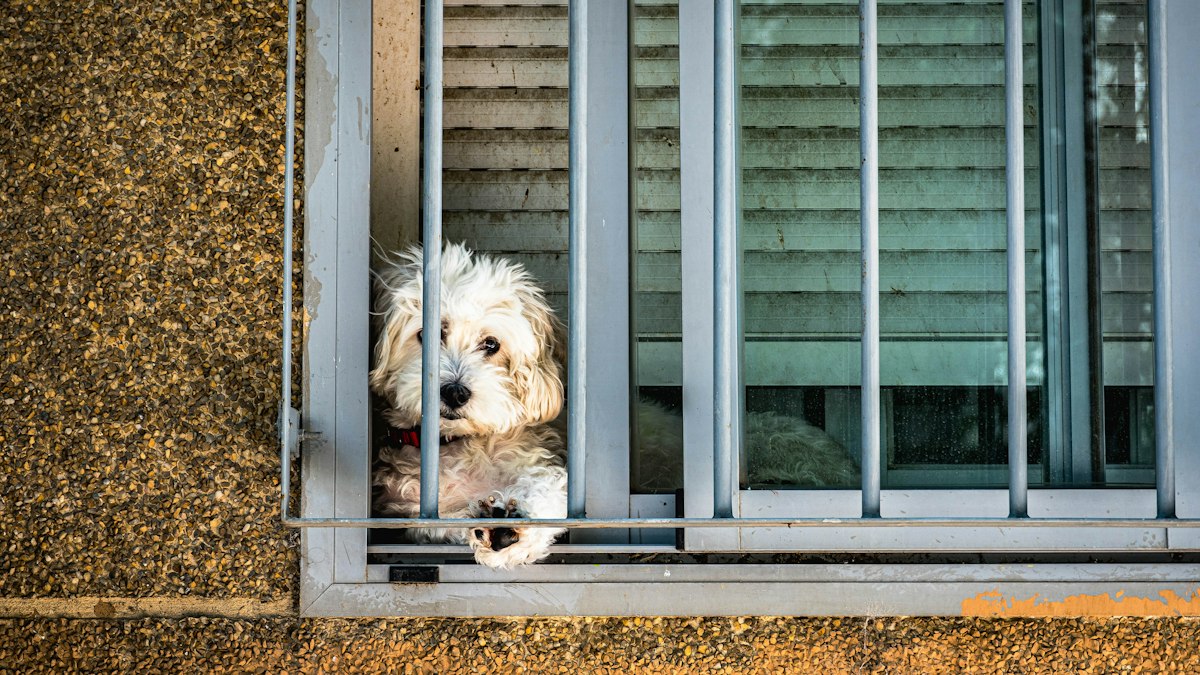
Few things strain a friendly street faster than a dog barking at neighbours every time they step outside. Whether your dog barks at the people next door, their dog, or just their car pulling in, you can reduce it. This guide walks you through why it happens, how to fix it and how to keep things good with the neighbours while you work on it.
Quick answer
Dogs bark at neighbours because they hear and see them often, at close range, and barking seems to “make them go away”. Cut down on what your dog can see and hear, supervise yard time, give plenty of exercise and mental work, and teach your dog to look at you or come inside when neighbours appear, rewarding every time. Talk openly with your neighbours about your plan. Our main dog barking guide has help for other barking triggers too.
Why does my dog bark at the neighbours?
Why does my dog bark at neighbours but not at other people?
Neighbours are close to your dog’s territory and show up again and again. Your dog may see them as intruders near home, even if they wouldn’t bark at the same people at the park.
Is my dog barking at neighbours out of fear?
Sometimes. A fearful dog may bark with a stiff body, a tucked tail or while backing away. Fear barking needs a gentle approach with lots of distance and reassurance.
Why does my dog bark at the neighbour’s dog?
Two dogs separated by a fence often get frustrated and bark at each other. They can’t meet, sniff or move away, and that tension builds. Many fence-barking dogs would get along fine elsewhere.
Why does my dog bark at neighbours through the wall?
In flats, condos and semi-detached homes, dogs hear doors, voices and footsteps through shared walls. Sudden sounds near the home trigger alert barking.
Why does my dog bark when neighbours are in their garden?
Voices, smells, garden tools and children playing next door are all interesting or worrying to a dog. If your dog is outside at the same time, they get to practise barking at it.
Does boredom make neighbour barking worse?
Yes. A dog left in the yard with nothing to do often watches the fence for something to happen. Neighbours become the day’s entertainment.
How do I stop my dog barking at neighbours?
Follow these steps consistently for a few weeks. Small daily sessions add up.
- Find the triggers. Note when the barking happens: morning car, garden time, the dog next door, the kids coming home. Patterns help you plan.
- Block the views. Use frosted window film, close blinds at busy times or add a solid screen to see-through fencing.
- Supervise yard time. Go outside with your dog rather than leaving them alone out there. Bring treats.
- Teach “look at that”. When your dog notices a neighbour but hasn’t barked, say “yes” and reward. They learn that neighbours predict treats from you.
- Teach a reliable recall. Practise calling your dog to you for a great reward, first in quiet moments, then when a neighbour is far away, then closer.
- Bring your dog in before it escalates. If barking starts, calmly call or lead your dog inside. No scolding. Try again later.
- Meet exercise and enrichment needs. Daily walks, sniffing, food puzzles and play reduce the urge to bark at every movement.
How long will it take for my dog to stop barking at the neighbours?
You may see a change within a couple of weeks once views are blocked and yard time is supervised. Changing how your dog feels about neighbours can take longer. Stay consistent.
Should I leave my dog in the yard alone?
Not while you’re working on neighbour barking. Unsupervised yard time lets your dog practise barking over and over. Short, supervised outings are far better.
What if my dog won’t come when called because they’re barking?
That’s common. Practise recall a lot when there are no distractions. In the moment, walk up calmly, show a treat, and lead your dog away on a lead. Our guide on how to teach your dog to come when called can help.
Can my neighbour help with training?
If they’re willing, yes. A neighbour can toss a treat over the fence (with your agreement) when your dog is calm, or stand at a distance while you reward quiet. Many neighbours appreciate being included.
How do I stop fence barking with the dog next door?
How do I stop two dogs barking at each other through the fence?
Prevent them from running the fence line together. Agree on different yard times with your neighbour, use a solid barrier or plants to block the view, and reward your dog for turning away.
Should I let my dog meet the neighbour’s dog?
A calm, on-lead walk together on neutral ground can sometimes help, but only if both dogs are friendly. Don’t force it, and don’t do it through the fence. If either dog is tense, stop.
Is fence running harmful?
Repeated fence running can build frustration and wear grooves in lawns. It can also lead to injuries or arguments between the dogs. Breaking the habit is good for everyone.
What if I live in an apartment?
How do I stop my dog barking at neighbours in an apartment?
Keep your dog’s bed away from the front door and shared walls. Use white noise or soft music to mask hallway sounds and train a “go to mat” routine for when footsteps pass.
Why does my dog bark at people in the hallway?
Hallway sounds come right up to your door, which can feel like someone arriving. Our guide on a dog that won’t stop barking at the door has a full plan for this.
Can my landlord ask me to stop my dog barking?
Rules vary by building, city and country. Many leases and local by-laws include noise rules. Show that you’re actively working on the problem and keep notes of what you’re doing.
How do I deal with complaints from neighbours?
What should I say to a neighbour who complains about barking?
Thank them for telling you, listen calmly and ask when the barking happens. Explain the steps you’re taking. Most neighbours are reassured when they see you care.
How do I find out if my dog barks while I’m away?
Ask a neighbour, or record your dog with a phone or pet camera. Barking that starts when you leave may be linked to stress about being alone. See why your dog barks when you leave.
Could I get fined for my dog barking?
In some areas, local noise or animal control rules can lead to warnings or fines for persistent barking. Rules differ between cities, states and provinces, so check your own local authority’s guidance.
How do I keep a good relationship with my neighbours?
Stay friendly, keep them updated, and avoid leaving your dog outside early in the morning or late at night. A short note and a thank-you for their patience goes a long way.
What should I avoid when my dog barks at neighbours?
Should I use a bark collar for neighbour barking?
We don’t recommend shock, spray or vibration bark collars. They can make your dog link neighbours with something unpleasant, which can increase fear or aggression toward them.
Should I yell at my dog when they bark at neighbours?
Yelling adds more noise, may stress your dog and doesn’t teach them what to do instead. Calmly calling them away and rewarding is far more effective.
Is keeping my dog indoors all day the answer?
Keeping your dog in more can help in the short term, but they still need outdoor time, sniffing and exercise. The aim is a calm dog outdoors, not a dog shut away.
My dog barks at the neighbours and everything else too. What now?
If barking is wide-ranging, start with the bigger picture. Our article on why your dog barks at everything will help you spot the common thread.
How can I make my yard and home less triggering?
What’s the best fence to stop a dog barking at neighbours?
A solid fence that blocks the view usually helps more than an open one. If you can’t change the fence, add privacy screening, reed panels or tall planters along the section where your dog watches most.
Can I create a buffer zone in the yard?
Yes. A low inner barrier or a row of shrubs set back from the shared fence stops your dog from running right along it. Less contact with the fence line means less barking.
Where should my dog’s favourite resting spot be?
Move beds and favourite lounging spots away from front windows, glass doors and walls you share with neighbours. Dogs tend to watch whatever is in front of them while they rest.
Does background noise help with neighbour barking indoors?
Soft music, a fan or white noise can cover footsteps, voices and car doors next door. It’s especially handy in flats and townhouses with thin walls.
What times of day are worst for neighbour barking?
For many dogs it’s early morning, when people leave for work, and late afternoon, when everyone comes home. Plan walks, chews or puzzle toys for those times so your dog is busy elsewhere.
Can scent games keep my dog calm in the yard?
Scattering a few treats in the grass or hiding a toy for your dog to find keeps their nose down and their mind busy. A dog who’s sniffing is not watching the fence.
What if my dog barks at neighbours while on a walk past their house?
Cross the street or add distance, and reward your dog for looking at the house calmly. Our guide on a reactive dog on walks explains how to build this up.
Does age or breed affect neighbour barking?
Watchful breeds and young, energetic dogs often bark more at movement near home. Senior dogs with poorer hearing or sight may also startle and bark more. Adjust your plan to your dog.
Should I reward my dog for being quiet when neighbours are out?
Yes, and often. Each time your dog sees or hears a neighbour and stays calm, quietly praise them and drop a treat. Those small moments teach your dog what you want far faster than correcting the noisy ones.
Is a long-lasting chew useful during busy neighbour times?
A safe chew or stuffed food toy given indoors when neighbours usually come and go keeps your dog relaxed and busy. Chewing is soothing, and your dog spends less time on guard duty.
When should I get professional help?
When should I talk to my vet?
Speak to your vet if barking has started suddenly, your dog seems on edge all the time, or there are other changes like poor sleep, appetite changes or signs of pain.
When should I hire a trainer?
If neighbour barking hasn’t improved after a few weeks of consistent work, a qualified reward-based trainer can visit and help you set up a plan for your yard and home.
When does neighbour barking need a veterinary behaviourist?
If your dog lunges, snarls, tries to get over the fence or has shown aggression, ask your vet about a veterinary behaviourist. Keep your dog safely contained in the meantime.
Breeds that often deal with this
Any dog can bark at the neighbours, but breeds that are territorial or easily stimulated by sights and sounds often find it harder to switch off. Each breed page covers what helps.
- Beagle: its loud bay carries far, which makes neighbour barking more noticeable.
- Jack Russell Terrier: energetic and reactive to movement along fences and windows.
- Miniature Schnauzer: a watchful breed that likes to keep tabs on the street.
- German Shepherd: alert to anything near its territory and needs clear boundaries.
- Australian Shepherd: sensitive to movement and noise, especially when under-exercised.
Browse all dog breed guides.
Is your dog barking at the neighbours too?
Many owners are juggling a barky dog and a patient (or not so patient) neighbour. Share your story and get ideas in our dog owners community. For things that keep dogs busy, see our enrichment toys, and browse more dog problem solutions.
Leave a Reply
You must be logged in to post a comment.