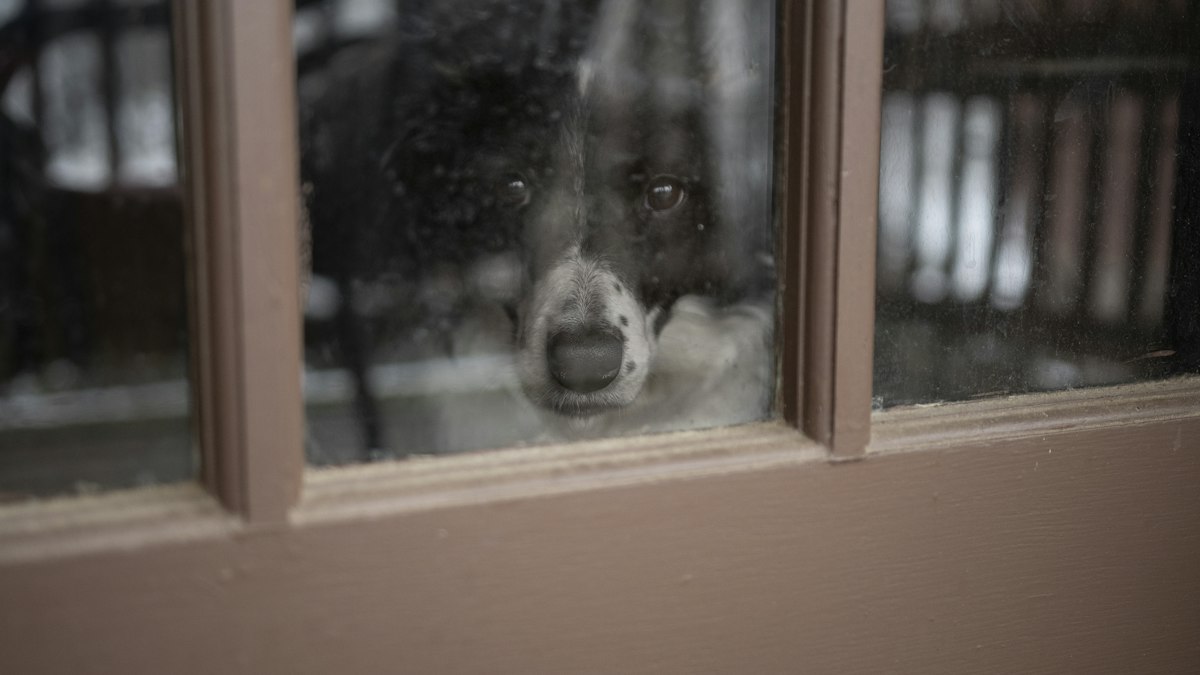
You grab your keys, step out the door, and the barking starts. Sometimes it stops after a minute, sometimes the neighbours tell you it went on all afternoon. If you’re wondering why your dog barks when you leave, the answer usually lies in how your dog feels about being alone, and that feeling can be changed with time and the right approach.
Quick answer
Dogs bark when you leave because of boredom, frustration, fear of being alone, or habits that built up over time. Short barking that stops quickly is common and often fine. Long or frantic barking, especially with howling, scratching or toilet accidents, may point to separation-related stress. Start by recording your dog, then build up alone time in tiny steps, make departures boring, give enrichment and talk to your vet if you see signs of panic. Our separation anxiety guide covers the bigger picture.
Why does my dog bark when I leave the house?
Is it normal for a dog to bark when I leave?
A few barks as you leave is fairly common, especially for young or new dogs. If your dog settles within a few minutes and seems relaxed later, it’s usually not a big concern.
What are the main reasons dogs bark when their owner leaves?
The main reasons are separation-related stress, boredom, frustration at being shut in, alerting to outside noises, and simple habit. Some dogs have a mix of these.
How do I know if it’s separation anxiety?
Signs of separation-related distress can include barking or howling that goes on and on, scratching at doors, chewing near exits, pacing, panting, drooling, and toilet accidents only when you’re out. A recording will show you what’s really happening.
Why does my dog bark only when I leave, not other family members?
Some dogs bond very strongly with one person. When that person leaves, the dog becomes anxious even if others are home. This is sometimes called hyper-attachment.
Why does my dog bark when I leave the room?
Barking when you just leave the room can mean your dog finds even brief separation hard. Dogs who follow you everywhere often do this. See why your dog follows you everywhere.
Could my dog be barking from boredom?
Yes. A dog left without enough exercise or anything to do may bark to fill the time. Bored dogs often also chew, dig or wander around looking for something to do.
Is my dog barking at noises while I’m out?
Some dogs bark at passers-by, deliveries or neighbours when nobody is home to redirect them. That kind of barking comes and goes with outside activity, not with your leaving.
How can I tell what kind of barking it is?
How do I find out what my dog does when I’m gone?
Set up a phone or pet camera and record your next few departures. Watch the first 30 minutes closely. That’s when most anxious dogs show the strongest signs.
What does anxious barking sound like?
Anxious barking is often high-pitched, repetitive and mixed with whining or howling. It may continue long after you’ve gone and come with pacing or scratching at the door.
What does bored barking look like?
Bored barking tends to come in bursts, often at sounds or movement, with calm rest in between. The dog may play with toys, look out the window and then nap.
Why does my dog howl when I leave?
Howling is a long-distance call. Some dogs howl to try to reach a missing family member. It’s a common sign that your dog is struggling with being alone.
How do I stop my dog barking when I leave?
These steps help most dogs. For dogs with real panic, go slowly and work with your vet.
- Record your dog first. Knowing whether it’s mild barking or real distress tells you how fast you can move.
- Meet needs before you go. Give a good walk, a sniff session and a toilet break before any departure.
- Make arrivals and departures boring. Skip big goodbyes and wild hellos. Calm in, calm out.
- Break the link with departure cues. Pick up your keys, put on your coat, then sit back down. Repeat until these cues mean nothing.
- Practise tiny absences. Step out for a few seconds, come back before your dog gets worried, and build up slowly. Stay below the point where barking starts.
- Offer enrichment as you leave. A stuffed food toy or lick mat can help bored or mildly worried dogs. If your dog won’t eat when alone, that’s a sign of stress.
- Create a calm space. A comfy bed, background sound and closed curtains help some dogs settle.
- Avoid long absences while training. Use a sitter, friend or daycare that suits your dog to cover longer days until your dog can cope.
How long does it take to stop barking when I leave?
Mild barking can improve in a few weeks. True separation-related anxiety often takes several months of gentle practice. Progress isn’t always steady, so expect some ups and downs.
Should I say goodbye to my dog when I leave?
A quick, calm “see you later” is fine for most dogs. Long, emotional goodbyes can wind your dog up and make the moment you leave feel bigger.
Should I come back if my dog is barking?
During training, try to return before barking starts, not during it. If you do return during barking, come in calmly and don’t make a fuss. Then make the next absence shorter.
Does leaving the TV or radio on help?
Background sound can mask outside noises and help some dogs relax. It won’t fix real anxiety on its own, but it’s an easy thing to try.
Will a crate stop my dog barking when I leave?
A crate can help dogs who already love it. For anxious dogs, a crate can increase panic and even lead to injuries. If your dog is distressed in a crate, use a safe room or gated area instead.
How does this link to other behaviour problems?
My dog destroys things and barks when I leave. Is that connected?
Very likely. Barking and destruction together are a common sign of distress about being alone. Read why dogs destroy things when alone for more on this.
Does my dog bark when I leave because of separation anxiety?
It may be. Our detailed guide on how to help a dog with separation anxiety takes you through a full, gentle plan.
My dog barks at everything, not just when I leave. Where do I start?
If barking happens all day, whether you’re there or not, it may be general alert barking. Start with why your dog barks at everything and our main barking guide.
Does my dog also bark at night when alone?
Some dogs who struggle alone in the day also bark at night if they sleep away from you. Our tips on how to stop dog barking at night can help.
How do I build up alone time step by step?
How short should the first absences be?
For a dog who struggles, start with just a few seconds outside the door. If your dog stays calm, add a little time. If they start barking, go back to a shorter time on the next try.
How many practice sessions should I do a day?
A few short sessions a day is plenty. Space them out and keep them calm. Practising too much in one go can stress your dog and undo progress.
How will I know when to make absences longer?
Watch your recordings. If your dog stays relaxed, lies down or sniffs around calmly for several sessions in a row, you can stretch the time a little. Body language matters more than the clock.
What if I have to work while my dog is still learning?
Many owners use a dog sitter, a trusted friend, a dog walker or a suitable daycare to cover the gap. Avoiding long absences during training stops your dog from rehearsing panic.
Should I leave the same way each time?
Mixing it up can help. Leave through a different door now and then, or vary the order of your routine. That stops one specific cue from setting off your dog’s worry.
Does more exercise help a dog who barks when I leave?
Exercise helps bored or energetic dogs settle more easily. A walk and a sniff before you go is worthwhile for almost every dog. On its own, though, it won’t fix true separation anxiety.
Is there a best time of day to practise?
Choose times when your dog is naturally sleepy, like after a walk and a meal. A relaxed dog is far more likely to cope well with a short absence.
Can a puppy learn to be alone without barking?
Yes, and it’s easiest to start early. Give puppies short, happy spells alone from the first days at home, with a chew or a comfy bed. It sets them up for a calmer adult life.
Does the room my dog stays in make a difference?
It can. Some dogs feel safer in a quieter room away from the front door and street noise. Others settle best in the room where the family usually spends time. Watch your recordings to see where your dog relaxes.
What should I avoid?
Should I punish my dog for barking when I’m gone?
No. Your dog can’t connect punishment after you return with barking earlier. It only adds fear to your homecomings and can make anxiety worse.
Are bark collars okay for barking when I leave?
We strongly advise against shock, spray or vibration bark collars, especially for dogs left alone. An anxious dog can become even more frightened, with nobody there to help them.
Will getting another dog stop the barking?
Sometimes a second dog helps a lonely dog, but many anxious dogs are attached to people, not dogs. It’s a big decision that shouldn’t be made just to solve barking.
Should I leave my dog alone for longer to “get used to it”?
Leaving an anxious dog for long periods usually makes things worse. Short, successful absences that slowly grow build real confidence.
When should I talk to a vet or behaviour professional?
When should I call my vet?
Call your vet if your dog panics when alone, injures themselves, stops eating, or has toilet accidents only when you leave. Your vet can check for health problems and talk about all the options, which may include medication alongside training.
When should I contact a trainer?
A qualified reward-based trainer with experience in separation problems can help you set up a step-by-step plan and keep it on track. Make sure they avoid punishment and flooding.
When does my dog need a veterinary behaviourist?
For severe distress, self-injury, escape attempts or cases that don’t improve with training, ask your vet about a veterinary behaviourist. They can assess both health and behaviour.
Can I give my dog something to calm them when I leave?
Only under your vet’s guidance. Never give your dog human medicines or calming products without veterinary advice. Some dogs benefit from medication, but it’s a decision for your vet.
Breeds that often deal with this
Any dog can bark when left alone, but breeds that bond closely with their people or need lots of activity are often more prone to it. Their breed pages explain what helps.
- Chihuahua: often deeply attached to one person and vocal when they leave.
- Beagle: a social pack dog that can complain loudly when left alone.
- Cavalier King Charles Spaniel: a true companion breed that prefers company to quiet hours alone.
- Border Collie: a busy mind that may bark from boredom without enough exercise.
- Jack Russell Terrier: high energy that can turn into barking when no outlet is offered.
Browse all dog breed guides.
Is your dog barking when you leave too?
You’re not the only one heading out the door to the sound of barking. Share what your dog does and what’s helped in our dog owners community. For things to keep your dog busy while you’re out, see our enrichment toys and puzzles.
Leave a Reply
You must be logged in to post a comment.