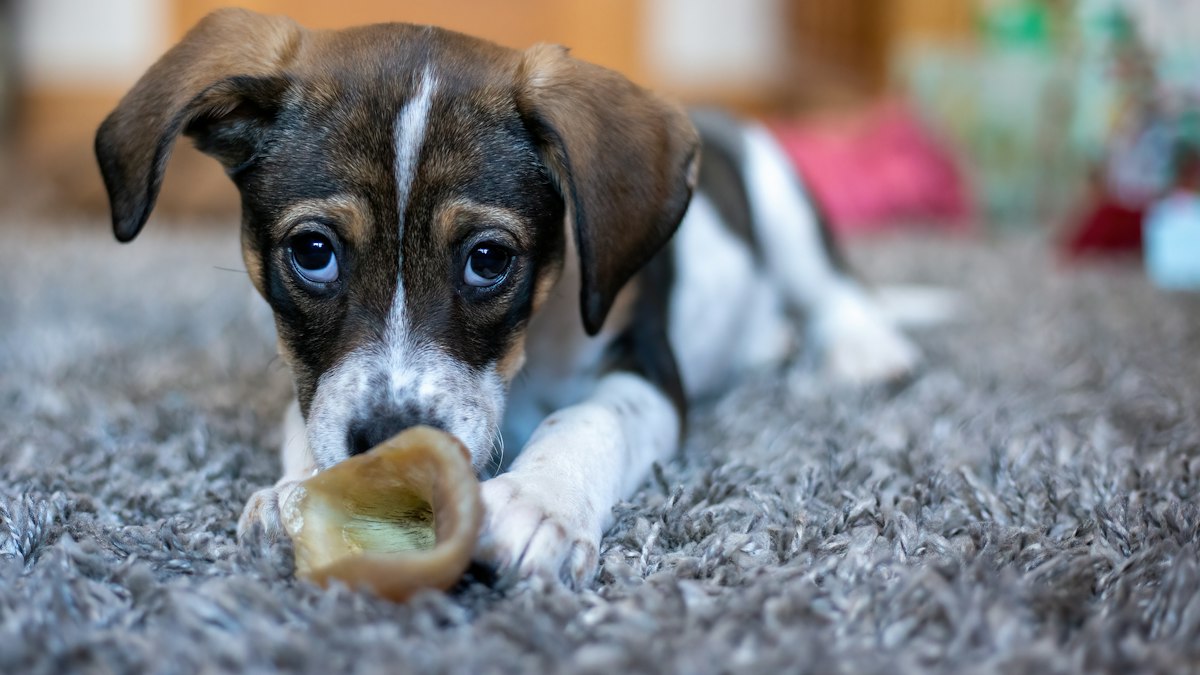
If you want to know how to stop a puppy from chewing furniture, start with this: chewing isn’t bad behaviour, it is a basic puppy need. Teething, curiosity and boredom all send little teeth toward table legs and sofa corners. The trick is not to stop chewing altogether, but to steer it onto things you are happy to sacrifice.
Quick answer: how to stop a puppy chewing furniture
Puppy-proof the room, give plenty of appropriate chew toys, supervise closely, and calmly swap furniture for a toy every time your puppy starts to chew the wrong thing, then praise them for chewing the right one. Add daily exercise, sniffing games and naps so your puppy isn’t overtired or bored. Never punish. With consistency, most puppies grow out of furniture chewing as their adult teeth settle and good habits form.
Why do puppies chew furniture?
Is it normal for a puppy to chew everything?
Yes. Puppies explore the world with their mouths, much like babies grab everything they can reach. Chewing is normal, healthy and soothing for them.
Is my puppy chewing because of teething?
Very likely, if your puppy is roughly three to seven months old. Adult teeth are coming through, gums are sore, and chewing helps relieve the discomfort. Wooden furniture can feel especially satisfying.
Why does my puppy chew furniture when bored?
A bored puppy looks for something to do, and the nearest chair leg is easy entertainment. More play, training and enrichment usually cuts down boredom chewing quickly.
Can chewing be a sign of stress?
It can. Chewing is calming, so some puppies chew more when anxious, over-tired or left alone. If the damage mostly happens when you’re out, read why dogs destroy things when alone.
Why does my puppy chew only when I’m not looking?
Often because that’s when they get the chance. Some puppies have also learned that chewing in front of you leads to a chase game or a telling-off, so they wait until you’re busy.
Why does my puppy chew wood specifically?
Wood has a satisfying texture and gives a little under pressure, which feels great on sore gums. Offer safe, firm chew toys with a similar feel.
Is my puppy chewing for attention?
Sometimes. If grabbing the sofa cushion always gets you to jump up, your puppy will remember. Make calm toy chewing the thing that earns your attention instead.
How to stop a puppy chewing furniture: step by step
This is the core plan. Most owners see real progress within one to three weeks.
- Puppy-proof first: remove shoes, cables, cushions and anything precious, and block access to the worst-hit furniture with gates or covers.
- Set up a chew station with three or four different textures: firm rubber, softer rope, a food-stuffable toy and something chewable your puppy loves.
- Rotate toys every couple of days so they stay interesting.
- Supervise closely, using a puppy pen or a tether when you can’t watch.
- Interrupt and redirect: when your puppy mouths furniture, calmly say a neutral word, offer a toy, and praise warmly when they take it.
- Reward good choices even when you didn’t ask. Notice quiet toy chewing and drop a treat beside them.
- Meet their needs with daily play, short training sessions, sniffing walks and plenty of sleep.
- Give freedom slowly, one room at a time, once your puppy is reliable in a smaller area.
What are the best chew toys for puppies?
Choose toys made for puppies, sized so they can’t be swallowed, and firm but with a little give. Food-stuffable rubber toys are excellent because they keep puppies busy for a long time. Browse ideas in our enrichment and chew toys section.
How many chew toys does a puppy need?
Enough to offer variety, often five or six in rotation, with two or three available at any time. Too many at once can make them less exciting.
Can frozen toys help a teething puppy?
Yes. A wet, frozen cloth toy or a frozen stuffed rubber toy can soothe sore gums. Always supervise, and throw away anything that starts to break apart.
Should I give my puppy old shoes to chew?
No. Puppies can’t tell an old shoe from your favourite new pair. Stick to toys that clearly look different from household items.
What should I do when I catch my puppy chewing furniture?
Should I punish my puppy for chewing furniture?
No. Shouting, smacking or harsh corrections create fear and can make your puppy chew secretly or become anxious, which often means more chewing. Calm redirection works better and builds trust.
What if I find chewed furniture later?
Let it go. Your puppy can’t link a past chewing session to your reaction now. Simply tighten management so it can’t happen again and review what they might have needed at that time.
Do bitter sprays work on furniture?
Pet-safe bitter sprays can help as one part of the plan, especially on table legs. Test on a hidden area first, and remember some puppies don’t mind the taste. Sprays never replace good chew toys and supervision.
Should I say “no” when my puppy chews?
A neutral interrupter is fine, but “no” alone doesn’t tell your puppy what to do instead. Always follow it with a toy to chew and praise for taking it.
My puppy grabs furniture and runs off. What now?
Don’t chase, it turns into a fun game. Walk away calmly, or offer a trade with a tasty treat. Practise “drop it” with toys during calm moments so the trade becomes easy.
Preventing furniture chewing when you’re not watching
Should I use a crate or a puppy pen?
A comfortable crate or pen with safe chews is a great way to prevent damage when you can’t supervise. Introduce it slowly with treats and meals so it feels like a cosy den, never a punishment.
How can I stop my puppy chewing when left alone?
Leave them in a safe, puppy-proofed area with a stuffed food toy and a chew, after a play session and a toilet trip. Build alone time in small steps. If you see distress, our guide on separation anxiety will help.
How long can I leave a chewing puppy alone?
Keep it short while you’re working on this. Young puppies also need frequent toilet trips, so a rough guide is their bladder limit, about one hour per month of age plus one.
Can I cover my furniture?
Yes. Throws, corner guards and moving furniture out of reach for a few months are all smart. Management is just as important as training at this stage.
Exercise, enrichment and sleep
How much exercise does a chewing puppy need?
Puppies need several short bursts of play and gentle walks rather than long hikes. Mental work like sniffing, short training games and puzzle feeders tires them out without straining growing joints.
Does tiredness make puppies chew more?
Very often. Overtired puppies get bitey, frantic and destructive, a bit like a cranky toddler. Many puppies need 16 hours or more of sleep a day, so plan regular naps in a quiet spot.
What enrichment helps reduce chewing?
Scatter feeding in the garden, snuffle mats, stuffed rubber toys, cardboard boxes to shred under supervision, and short training sessions. Five minutes of sniffing work can tire a puppy more than a long walk.
Can training classes help with chewing?
Yes. A good reward-based puppy class builds focus, teaches “leave it” and “drop it,” and gives your puppy safe social time, all of which help reduce chewing.
Teaching skills that stop furniture chewing
How do I teach my puppy “leave it”?
Hold a treat in a closed fist. When your puppy stops nudging and backs off, even for a second, mark it with “yes” and reward from your other hand. Build up slowly until you can use the cue near a chair leg.
How do I teach “drop it”?
While your puppy holds a toy, show a tasty treat at their nose. The moment they let go, say “drop it,” give the treat, then hand the toy back. Your puppy learns that dropping things is a good deal, not a loss.
Should I teach a “settle” or “go to bed” cue?
Yes. A puppy who knows how to relax on a mat with a chew is far less likely to wander off and gnaw the sofa. Reward calm lying down on the mat, starting with just a few seconds.
How long should training sessions be?
Keep them short, around three to five minutes, a few times a day. Puppies learn best in quick, fun bursts, and ending on a win keeps them keen.
Why does my puppy chew more in the evening?
Many puppies get a burst of wild energy in the evening, often called the “zoomies.” This is usually a sign they are overtired. Offer a calm chew in their pen and help them wind down for sleep.
Does my puppy chew more when other dogs are around?
Excitement can lead to more mouthing and grabbing. Supervise play, give breaks, and offer separate chews so there is no competition over toys.
Are some chews unsafe for puppies?
Yes. Avoid cooked bones, very hard items that could crack teeth, and anything small enough to swallow. Always supervise new chews, and replace toys once they start to break apart.
Can chewing furniture be dangerous?
It can be. Splinters, varnish, foam stuffing and fabric pieces can injure the mouth or be swallowed. That’s another reason to prevent access rather than wait for training to kick in.
When will my puppy stop chewing furniture?
At what age do puppies stop chewing everything?
The heaviest chewing usually eases once adult teeth are in, often around six to seven months. A second chewy phase can show up later in adolescence. Good habits now make that phase much easier.
Do some breeds chew more than others?
Working and retrieving breeds often love to chew and carry things, but any puppy can be a chewer. Energy level and enrichment matter more than breed.
My adult dog still chews furniture. Is it too late?
Not at all. The same steps work at any age. In adult dogs, check for boredom, stress or anxiety, and ask your vet whether dental pain could be a factor.
When to call a vet or qualified trainer
Talk to your vet if your puppy swallows pieces of furniture, fabric or foam, shows vomiting, loss of appetite, tummy pain or trouble pooping, or seems to chew obsessively. Swallowed objects can cause blockages, so call right away if you suspect it. Mention any chewing on non-food items like stones or fabric, too.
If the chewing comes with panic when left alone, constant restlessness, or you feel stuck after a few weeks, a qualified reward-based trainer or a veterinary behaviourist can help. Avoid anyone who recommends punishment or aversive tools. More ideas are on our dog problem solutions page, and our guide to puppy peeing in the house covers another common puppy struggle.
What if my puppy eats what it chews?
Swallowing non-food items is risky and worth raising with your vet. Increase supervision, remove those items and give safer chew alternatives.
Breeds that often deal with this
All puppies chew, but energetic and mouthy breeds often go through a longer and stronger chewing phase. Their breed pages share chew-management tips for each.
- Labrador Retriever: famously mouthy as a puppy and a strong chewer.
- Golden Retriever: loves carrying and chewing things, especially while teething.
- Boxer: playful and strong, so it needs sturdy chew options.
- Jack Russell Terrier: busy and curious, and may chew out of boredom.
- Belgian Malinois: an intense working breed that needs lots of outlets.
- Beagle: curious and food-motivated, often exploring with its mouth.
Browse all dog breed guides.
Is your puppy chewing furniture too?
Chewed chair legs are practically a rite of passage for puppy owners. Share your puppy’s age, what they love to chew and what has worked for you in our dog owners community. Your tip might save someone’s sofa, and you’ll pick up fresh ideas from people living the same thing.
Leave a Reply
You must be logged in to post a comment.