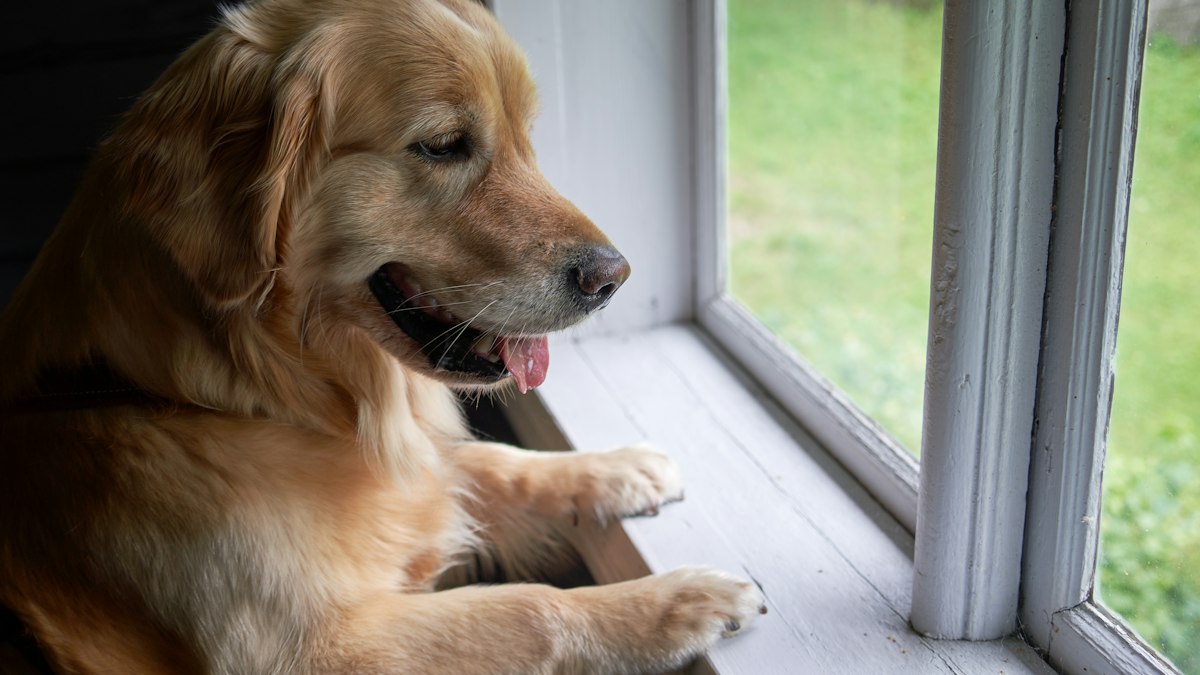
The doorbell rings, and suddenly your dog is a howling, spinning, scratching mess at the front door. If your dog won’t stop barking at the door, you’re dealing with one of the most common barking problems there is. It’s fixable with a clear plan, some practice and a bit of patience from everyone in the home.
Quick answer
Dogs bark at the door because it’s where exciting or worrying things happen: people arrive, parcels drop and footsteps come close. To stop door barking, manage access to the door, teach your dog a “go to your mat” routine, practise with fake doorbells until it’s easy, and reward calm greetings. Keep your own reaction calm and skip punishment or bark collars. You’ll find more help in our complete dog barking guide.
Why won’t my dog stop barking at the door?
Why does my dog bark when someone knocks?
A knock or ring tells your dog that someone is about to come in. For some dogs that’s thrilling, for others it’s worrying. Either way, the sound is a strong cue for barking.
Is my dog barking at the door to protect the house?
Many dogs bark to alert and warn. When the visitor leaves, like a delivery driver, the dog believes the barking worked. That’s why door barking gets stronger over time without training.
Why does my dog bark at the door when nobody is there?
Your dog may hear footsteps, voices, a car door or a neighbour’s door well before you do. Some dogs also react to doorbells on TV, phone notification sounds or similar tones.
Is door barking a sign of excitement or fear?
It can be either. An excited dog often wags loosely, jumps and spins. A fearful dog may bark with a stiff body, raised hackles, a tucked tail or back away while barking. Knowing which helps you choose your approach.
Why does my dog bark at the door then jump on guests?
Barking and jumping often come from the same over-excitement. Teaching a calm routine at the door helps both. See our guide on why dogs jump on everyone for greeting manners.
How do I stop my dog barking at the door?
Use this step-by-step plan. Practise short sessions daily, ideally with a helper.
- Choose a “place” spot. Pick a mat or bed a few metres back from the door, ideally with a view of it but not right next to it.
- Teach “go to your mat” in quiet times. Toss a treat on the mat, reward your dog for stepping on it, then for lying down. Add the cue once they’re doing it reliably.
- Add a pretend knock. Knock gently on a table, then immediately cue “mat” and reward. Repeat until the knock alone sends your dog to the mat.
- Move to the real door. Have a helper knock softly on the actual door. Cue “mat”, reward, and keep rewarding while your dog stays there.
- Build up to the doorbell. Use a recording of your doorbell at low volume first, then louder, then the real bell.
- Practise with calm visitors. Ask a friend to come in slowly while you reward your dog on the mat. Release them to say hello only when they’re calm.
- Manage the times you can’t train. Use a baby gate, a closed door or a long-lasting chew in another room for deliveries until the routine is solid.
How long does it take to stop door barking?
With daily practice, many dogs show progress in one to three weeks. Strong habits or fearful dogs may need longer. Short, frequent sessions work better than a long one once a week.
What if my dog won’t stay on the mat?
Make it easier. Practise without any knocking, reward more often and use tastier treats. Then add the knock back in very softly. If they still struggle, use a lead or gate to help them succeed.
Should I use a “quiet” cue for door barking?
A “quiet” cue can help when it’s been taught calmly with rewards. Many dogs, though, find it easier to do something, like going to a mat, than to simply stop barking.
Can I let my dog bark once or twice, then stop?
Yes. Many owners are happy with a couple of alert barks followed by calm. Thank your dog, call them to you for a treat, and send them to their mat. That’s a realistic, kind goal.
How do I handle visitors and deliveries?
What should visitors do when my dog barks at the door?
Ask visitors to come in calmly, avoid eye contact at first and ignore your dog until they’ve settled. Big greetings at the door make barking and jumping more likely.
How do I stop my dog barking at the delivery driver?
Delivery drivers come and go fast, which teaches your dog that barking “works”. Ask for parcels to be left in a box away from the door, keep your dog in a back room around delivery times and practise doorbell training in quiet times.
Should I put my dog in another room when guests arrive?
That’s a smart move while your dog is still learning. Give them a stuffed food toy or chew behind a gate or closed door. Bring them out on lead once things are calm.
How do I greet guests with a barky dog?
Have treats ready by the door. Let your guest in, then reward your dog for four paws on the floor or for staying on the mat. Let them say hello only when they’re calm.
Can I change my doorbell sound to help?
Changing to a new tone can give you a short break while you train, because your dog has no history with the new sound. Start training with it straight away, or it’ll soon become a trigger too.
What if my dog is scared, not excited, at the door?
How can I tell my dog is afraid of visitors?
Signs include barking while backing away, hiding, a low tail, ears pinned back, trembling, growling or lip licking. A fearful dog needs space and should never be forced to greet strangers.
How do I help a fearful dog at the door?
Give your dog a safe room away from the door with water and a comfy bed. Let them choose whether to come out. Ask visitors to toss treats away from themselves rather than reaching out to your dog.
Should I make my scared dog say hello to guests?
No. Forcing a scared dog to greet people can make fear worse and may lead to snapping. Let your dog watch from a distance and reward calm looks.
When is door barking linked to aggression?
If your dog growls, snaps, lunges or has bitten at the door, put safety first. Use gates and keep your dog away from visitors, and get help from a professional quickly.
What should I avoid with door barking?
Is it okay to grab my dog’s collar when they bark at the door?
Grabbing a collar suddenly can make your dog feel more stressed and may lead to a snap. Use a calm lead, a gate or teach a “come to me” cue instead.
Should I use a bark collar for door barking?
We advise against shock, spray or vibration bark collars. They can make your dog link visitors with discomfort, which can increase fear and even aggression at the door.
Is shouting “no” at the door helpful?
Usually not. Your dog may hear it as you joining in, and the chaos at the door gets louder. A calm cue they’ve already learned works much better.
Will my dog just grow out of door barking?
Some puppies calm down with age, but most door barking gets stronger with practice. Starting training now saves a lot of noise later.
Does door barking link to other barking problems?
My dog barks at the door and at everything else. Is that connected?
Often, yes. A dog who is generally alert or under-stimulated will bark at many things. Learn more in our article on why your dog barks at everything.
My dog barks at the door when neighbours walk past. What helps?
Block views from front windows and use background sound to mask footsteps. Our tips for a dog barking at neighbours go into more detail.
Why does my dog bark at the door when I leave?
If barking happens as you leave rather than when people arrive, it may be about being left alone. Read why your dog barks when you leave to see the difference.
How do I practise door training without real visitors?
How can I practise doorbell training on my own?
Record your doorbell on your phone, or find a similar tone, and play it softly while you reward your dog for going to their mat. Turn the volume up a little each day. You can do several mini sessions while watching TV.
How many repetitions does my dog need?
Think in small numbers often. Five to ten repetitions, two or three times a day, works well for most dogs. Stop while your dog is still getting it right and having fun.
What treats work best for door training?
Use small, soft, tasty treats your dog really loves, like bits of cooked chicken or cheese. The door is a big distraction, so ordinary dry biscuits may not be enough at first.
Should every family member practise too?
Yes. If one person rewards calm and another opens the door to a barking dog, your dog gets mixed messages. Agree on the routine and stick a short note by the door if that helps.
What if my dog barks at the door while I’m out?
When nobody is home, you can’t train, so manage instead. Keep your dog in a room away from the front door, use background sound, and leave a long-lasting chew or puzzle to keep them busy.
Can a window film or curtain by the door help?
If your front door has glass panels or a side window, your dog may be reacting to what they see. Frosted film or a light curtain takes away the view and often cuts barking quickly.
Is it okay to use food toys when guests arrive?
Absolutely. Handing your dog a stuffed food toy on their mat just as guests come in gives them something better to do than bark. Over time, they start to look forward to the doorbell.
When should I get professional help?
When should I call a trainer about door barking?
If you’ve practised steadily for a few weeks and your dog is still out of control at the door, a qualified reward-based trainer can coach you in your own home.
When should I talk to a vet?
Talk to your vet if door barking appears suddenly, especially in an older dog, or if your dog seems to be in pain, startles easily or is losing hearing or sight.
When do I need a veterinary behaviourist?
If door barking comes with growling, lunging, snapping or biting, or your dog is in a panic around visitors, ask your vet for a referral to a veterinary behaviourist.
Breeds that often deal with this
Any dog can bark at the doorbell, but breeds with a strong watchdog streak tend to take door duty very seriously. Breed pages explain how to channel that alertness.
- Miniature Schnauzer: an eager doorbell announcer that responds well to a trained place cue.
- German Shepherd: a protective, loyal breed that likes to check every arrival.
- Yorkshire Terrier: small, bold and quick to sound the alarm at the door.
- Chihuahua: often wary of visitors and quick to bark at a knock.
- Doberman Pinscher: naturally watchful, and does best with calm greeting routines.
- Pomeranian: alert and vocal, often barking long after the door has closed.
Browse all dog breed guides.
Is your dog barking at the door too?
Tell us how your dog reacts to the doorbell and what has helped in our dog owners community. Other owners have been there and are happy to share. For useful training gear, see our enrichment and chew picks.
Leave a Reply
You must be logged in to post a comment.