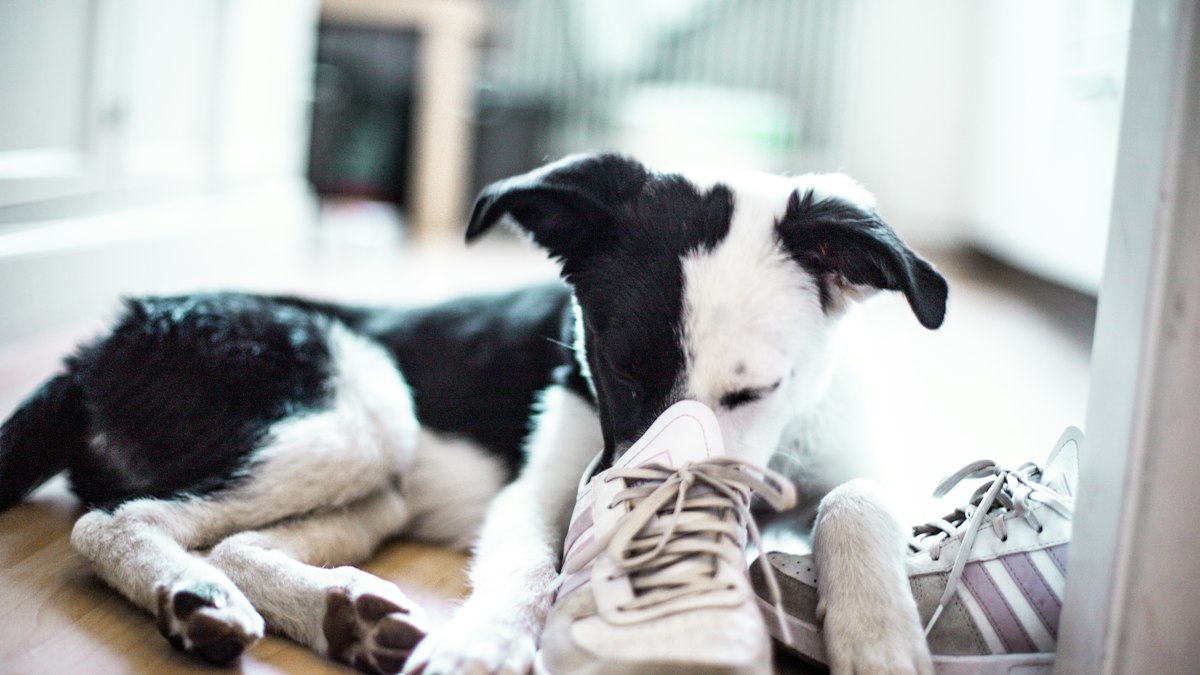
Walking through the door to find shredded cushions, a gnawed door frame or the bin tipped across the kitchen is frustrating. If your dog destroys things when alone, the damage is a message, not revenge. Once you work out why it happens, you can choose the right fix and protect both your dog and your home.
Quick answer
Dogs usually destroy things when alone because of boredom, excess energy, teething, or stress about being left. Start by finding the cause, ideally with a short video. Then give more exercise and enrichment before you leave, dog-proof a safe area, offer suitable chews, and build up alone time slowly. If the damage focuses on doors and windows or your dog seems panicked, treat it as possible separation anxiety and get professional help.
Why does my dog destroy things when alone?
Is my dog destroying things to get back at me?
No. Dogs do not plan revenge. The “guilty look” when you come home is a reaction to your body language and tone, not a sign they know they did wrong.
What are the most common reasons dogs destroy things when alone?
The main causes are boredom, not enough exercise, natural chewing needs, teething in puppies, and stress or panic about being left. Sometimes noises outside or hunger also play a part.
Can boredom make a dog destructive?
Yes. A bright, active dog with nothing to do will find their own entertainment, and cushions or shoes are easy targets. Boredom chewing often starts later in the absence, once your dog has rested.
Is destructive behaviour a sign of separation anxiety?
It can be. Damage around doors, windows and exits, along with barking, drooling or accidents, points towards separation distress. Learn more in how to help a dog with separation anxiety.
Why does my dog only chew my things?
Your belongings smell strongly of you, which can be comforting to a worried dog. Items like socks, shoes and remote controls are also easy to grab and fun to chew.
Why does my dog dig at the sofa or carpet when alone?
Digging can be a way to burn off energy, a nesting habit or a sign of stress. If it happens mainly near doors or windows, think about anxiety first.
Can noises outside make my dog destructive?
Yes. Delivery drivers, neighbours, traffic or other dogs can set off alarm and frustration. Dogs who bark a lot at outside sounds may chew or scratch too. Our guide on dog barking at neighbors has tips on managing noise.
How to tell what is causing the damage
How can I find out why my dog is destructive?
Set up a phone or camera and record your dog the next few times you go out. Watch what they do, when they start, and whether they seem relaxed or distressed. This is the single most useful step.
What does the timing of the damage tell me?
Damage that starts within minutes of you leaving often points to anxiety. Damage that happens later, after your dog has napped, is more likely to be boredom or a chewing habit.
What does the location of the damage tell me?
Chewed door frames, ripped blinds and scratched window sills suggest your dog is trying to follow you or escape. Random items around the house suggest play, boredom or teething.
What other signs point to stress?
Look for pacing, panting, whining, howling, drooling, toilet accidents or refusing food left for them. A calm dog who chews a toy and sleeps is a different picture from one who never settles.
How to stop a dog destroying things when alone
The right plan depends on the cause, but these steps help most dogs.
- Record and assess. Film your dog to understand when and why the damage happens.
- Meet daily needs. Give a proper walk with plenty of sniffing, some play and a toilet break before you leave.
- Create a safe zone. Use a dog-proofed room or a baby gate. Remove shoes, cables, cushions and anything risky to chew.
- Offer good chewing options. Leave safe, durable chews and a stuffed food toy so your dog has something right to chew.
- Add enrichment. Rotate puzzle feeders and lick mats so they stay interesting.
- Build alone time slowly. Practise short absences and increase the time gradually while your dog stays relaxed.
- Keep departures and returns calm. No big goodbyes or excited greetings.
- Get help if you see panic. If videos show real distress, talk to your vet and a reward-based professional.
How much exercise does a destructive dog need?
It depends on age, breed and health. As a rough guide, most adult dogs need at least one good walk a day plus play and brain games. A tired, satisfied dog is far less likely to chew the furniture.
Do puzzle toys really help destructive dogs?
They help many dogs, especially bored ones. Working for food uses energy and is naturally calming. You can find ideas in our enrichment picks.
Should I crate my dog to stop destruction?
A crate can work for a dog who is already relaxed in it. For anxious dogs, a crate may cause more panic and injuries from trying to escape. A safe, dog-proofed room is often a better option.
What should I leave my dog to chew?
Choose sturdy chews and toys that are the right size for your dog and cannot be swallowed whole. Avoid giving old shoes or socks, as this blurs the line between toys and your belongings.
Does leaving the TV or radio on help?
It can help some dogs by masking outside noises. It is a small extra layer, not a solution on its own.
Puppies, teething and young dogs
Is my puppy destroying things because of teething?
Very likely, if your puppy is a few months old. Teething makes chewing feel good. Provide puppy-safe chews and keep tempting items out of reach.
When do puppies stop destructive chewing?
Most puppies chew less once adult teeth are in, but young dogs often keep exploring with their mouths into adolescence. Training and good habits make the biggest difference. See how to stop a puppy from chewing furniture.
Can a young dog be destructive because of adolescence?
Yes. Adolescent dogs often have lots of energy and less self-control. Extra exercise, training games and patience help them through this stage.
Mistakes to avoid
Should I punish my dog for destroying things?
No. Your dog cannot connect a telling-off with something done hours earlier. Punishment adds fear and can make anxiety-related destruction worse.
Should I show my dog what they destroyed?
No. Rubbing their nose in it or pointing at the damage only confuses and scares your dog. Calmly clean up and focus on preventing the next time.
Are bark or shock collars a fix for destructive dogs?
No. Shock, prong and choke collars cause pain and fear and do not address the cause. Avoid them completely.
Is it a good idea to leave my dog alone for longer to “get used to it”?
Not if your dog is stressed. Long absences can make anxiety worse. Build up gradually instead.
Safety and health concerns
What if my dog swallowed something they chewed?
Call your veterinarian straight away if you think your dog swallowed fabric, stuffing, plastic, bones or anything sharp. Watch for vomiting, a swollen belly, straining or lethargy.
Can health problems make a dog destructive?
Yes. Pain, itchy skin, hunger or other health issues can increase chewing and restlessness. If your dog is also scratching a lot, read why is my dog scratching so much.
How do I keep my dog safe while alone?
Remove cables, toxic plants, medicines, cleaning products and small objects from their area. Close off rooms you cannot dog-proof.
More questions about destructive behaviour when alone
Why does my dog destroy things only sometimes?
Look at what was different on the bad days. A shorter walk, a longer absence, visitors next door, stormy weather or a change in schedule can all tip a dog over the edge. Keeping a simple diary often reveals the pattern.
Why does my dog destroy things when I leave but not when my partner leaves?
Your dog may be more attached to you, or may be fine as long as someone is home. Watch whether the damage happens when the house is empty or only when one person is missing.
Why did my adult dog suddenly start destroying things?
A sudden change in an adult dog deserves attention. Pain, illness, a new fear, a move, or a change in your work hours can all trigger it. Start with a vet check, then look at what changed in daily life.
Why does my dog rip up their own bed?
Some dogs dig and pull at bedding to make it comfortable, while others shred it out of boredom or stress. Try a tougher bed, more daytime enrichment, and watch your recordings for signs of worry.
Why does my dog tip over the bin when alone?
Bins smell amazing to dogs, and food rewards make the habit stick quickly. Use a bin with a secure lid or keep it behind a closed door. This is a management issue more than a training problem.
Why does my dog chew the door when I leave?
Chewing or scratching at the door you left through is a classic sign your dog is trying to follow you. It often points to separation distress rather than boredom. Our guide on why does my dog follow me everywhere can help you spot related signs.
Can a dog walker or daycare help with destruction?
Yes. Breaking up a long day with a visit, a walk or some company can make a big difference for bored and anxious dogs alike. Choose someone who uses kind, reward-based handling.
Does leaving more toys out help?
More is not always better. A few interesting items, rotated every few days, keep their novelty. Food-based toys usually hold attention longer than plain toys.
Should I hide treats around the house before I leave?
A simple scatter or sniffing game can be a great start to alone time for a relaxed dog. Keep it easy, and make sure your dog cannot get into anything unsafe while searching.
Will my dog’s destructive behaviour go away on its own?
It rarely disappears without changes. Boredom chewing often improves quickly once needs are met. Anxiety-related damage usually needs a step-by-step training plan to get better.
How do I protect furniture while I train?
Block access to favourite targets with baby gates or closed doors, cover sofas when you go out, and move valuables up high. Good management stops the habit from being practised while you work on the cause.
When to call your vet or a behaviour professional
When should I see a vet about destructive behaviour?
See your veterinarian if destruction starts suddenly, comes with other changes, or if your dog injures themselves. Health problems should be ruled out before training.
Who can help if my dog destroys things out of anxiety?
A qualified reward-based trainer or veterinary behaviourist can create a plan for your dog. Our dog problem solutions and guide to barking when you leave are useful places to start.
Breeds that often deal with this
Any dog can get destructive when left alone, but high-energy and strong-chewing breeds often need extra outlets to stay calm. Their breed pages explain what keeps each one busy.
- Labrador Retriever: a mouthy, energetic breed that loves to chew, especially when young.
- Border Collie: needs daily mental work, and boredom can lead to damage.
- Jack Russell Terrier: a busy digger and chewer that needs plenty of activity.
- Siberian Husky: energetic and clever, and may chew or dig when under-stimulated.
- Boxer: playful and strong, so it benefits from sturdy toys and exercise.
- Beagle: curious and food-driven, often investigating anything left out.
Browse all dog breed guides.
Is your dog destroying things when alone too?
Coming home to chaos is stressful, and many owners have been there. Share what your dog chews, what you have tried and what worked in the dogs.solutions community. Your experience could help someone else’s dog.
Leave a Reply
You must be logged in to post a comment.