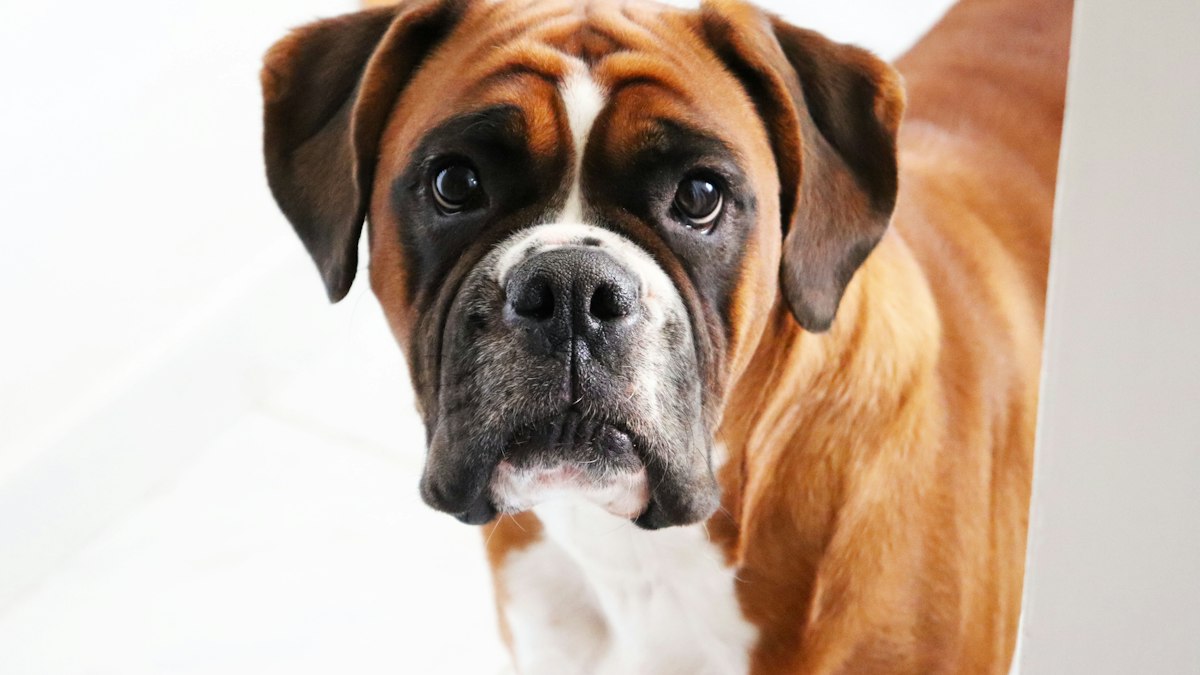
The Boxer is a strong, playful, deeply loyal family dog that often stays puppy-like well into adulthood. Owners most often struggle with jumping, mouthing, leash pulling and the sheer energy of a dog that wants to be part of everything.
Boxer at a glance
- Size: medium to large, muscular and athletic.
- Energy level: high; most need daily exercise and play.
- Shedding level: low to moderate; short coat that sheds steadily.
- Barking tendency: low to moderate; many are alert but not constant barkers, though some are vocal “talkers”.
- Good for first-time owners: with work. Friendly, but strong and boisterous.
- Time alone tolerance: low to moderate; Boxers usually want company.
Common Boxer problems and solutions
Why does my Boxer jump on everyone?
Boxers greet with their whole body, and many literally “box” with their front paws. Reward four paws on the floor, ask visitors to turn away from jumping and give your dog a sit to earn attention. Our guide to why dogs jump on everyone gives a full plan you can follow with guests.
When do Boxers calm down?
Many Boxers stay bouncy for the first few years, and some keep a playful streak for life. Consistent exercise, training and calm-reward routines help you get a settled adult sooner, but patience is part of owning this breed. Expect more focus and better manners with each year of steady training.
How much exercise does a Boxer need?
Most adult Boxers do well with an hour or more of activity a day, split into walks, play and training. Mix in sniffing walks and puzzle feeders, because mental work helps them settle just as much as running. Avoid hard exercise in hot weather, since their shorter muzzle makes heat harder to handle.
Why does my Boxer pull so hard on the leash?
Boxers are strong and enthusiastic, so pulling can become a habit fast. Use a well-fitted harness, reward the leash staying loose and stop or change direction when it goes tight. Our guide on how to stop a dog pulling on the leash breaks it into simple steps.
Why does my Boxer mouth and nip so much?
Mouthing is common in young Boxers, especially during play. Offer a tug toy instead of hands, pause play the moment teeth touch skin, and reward gentle behaviour. Over time your dog learns that soft play keeps the game going. Overtired puppies often mouth more, so a nap in a quiet crate can be the best fix of all.
Do Boxers drool?
Some do, particularly after drinking, eating or when excited. Keep a towel handy, wipe the lips after meals and place water bowls on a washable mat. Drool usually increases with excitement or heat, so a calm routine at feeding time helps too.
Do Boxers shed a lot?
They shed less than double-coated breeds, but the short hairs do show up on clothes and furniture. Brush weekly with a rubber mitt and see our dog shedding hub for tips on keeping your home tidy.
Why does my Boxer get so excited around other dogs?
Boxers often love to play and can come on too strong for calmer dogs. Practise calm greetings on leash, reward your dog for checking in with you and keep play sessions short with breaks. If excitement turns to barking or lunging, read our guide on the reactive dog on walks.
Why does my Boxer destroy things when left alone?
Boredom and loneliness are frequent causes in this people-loving breed. Exercise before you leave, offer a long-lasting chew or food puzzle and build alone time gradually. Our guide to dogs that destroy things when alone covers the full approach.
Why does my Boxer follow me everywhere?
Boxers are known for wanting to be close to their people. That is usually normal, but if your dog panics when you leave the room, read why your dog follows you everywhere and practise short, calm separations.
Why does my Boxer bark or “talk” so much?
Many Boxers grumble, woo and make funny noises when excited or asking for something, which is different from alarm barking. Avoid rewarding demands with attention, and instead ask for a sit before you give what your dog wants. If barking is aimed at passers-by, read why dogs bark at everything for practical steps.
Why does my Boxer have trouble settling at night?
A Boxer that did not get enough activity in the day may be restless at bedtime. Add an evening sniff walk, a short training game and a chew before bed, then keep the bedroom quiet and dim. Our guide on how to help a dog settle at night has a simple routine to follow.
Training tips for a Boxer
- Start early and stay consistent. Boxers grow strong quickly, so teach polite manners while your puppy is still small.
- Keep it playful. Short, upbeat sessions with games and toys work better than long drills for this fun-loving breed.
- Reward calm. Pay for sitting, lying down and settling, not only for active tricks.
- Teach impulse control. “Wait” at doors, “leave it” and polite greetings help manage enthusiasm.
- Practise loose-leash walking. Reward position beside you often, especially at the start of walks.
- Build a reliable recall. Use high-value treats and practise in safe areas; see teaching your dog to come when called.
- Socialise thoughtfully. Introduce people, dogs and places at a calm pace so your Boxer learns that new things are fine.
Health questions owners ask
Do Boxers have heart problems?
Some heart conditions are commonly discussed in the breed. Ask your breeder about health screening, keep up regular vet checkups and talk to your vet if you notice fainting, unusual tiredness or breathing changes.
Can Boxers handle hot weather?
Their shorter muzzle can make cooling down harder. Walk in cooler parts of the day, provide shade and water, and stop exercise if your dog pants heavily or slows down.
Are Boxers prone to lumps or skin issues?
Boxers can develop lumps and skin bumps like many dogs. Check your dog’s skin during grooming and have any new or changing lump looked at by your vet rather than guessing what it is.
Why is my Boxer scratching so much?
Itching can come from allergies, parasites or skin irritation. Read why dogs scratch so much and talk to your vet for a proper diagnosis.
Is a Boxer right for you?
Is a Boxer good for an apartment?
Yes, with daily exercise and training. A Boxer that is under-exercised in a small space tends to become bouncy and destructive, so plan your routine before bringing one home. Indoors, teach a settle on a mat and offer chew toys so your Boxer has calm things to do between outings.
Are Boxers good with kids?
Many Boxers are affectionate and patient family dogs, but their size and bounce can knock small children over. Supervise play, teach your dog calm manners and teach kids to respect the dog’s rest time. Giving your Boxer a crate or bed where nobody bothers it creates a safe place to recharge when the house gets loud.
Do Boxers get along with other pets?
Many do, especially when raised with them. Introduce new pets slowly, supervise early play and give each animal its own space to retreat.
Is a Boxer good for first-time owners?
A committed beginner can do well, especially with a good puppy class. If you are comparing breeds, read about the Labrador Retriever or the Bulldog to see how energy levels differ.
Related guides
- Leash problems and pulling
- Separation anxiety help
- Barking problems and solutions
- Common dog problems
- Stop a puppy chewing furniture
- Enrichment toys and puzzles
Share your Boxer experience
Living with a Boxer? Share what helped your dog settle, ask questions and swap tips in our dog owners community, or explore more dog breed guides.