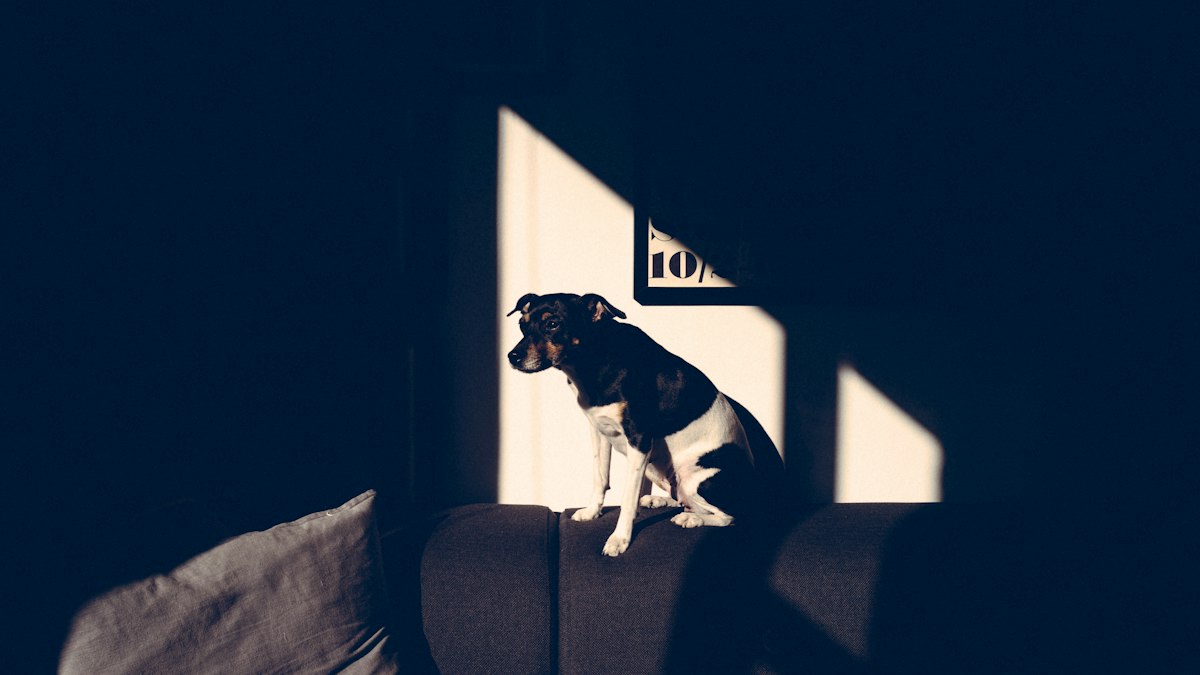
Coming home to a chewed door frame, a puddle by the entrance or a neighbour’s note about howling is upsetting, and it is even harder when you know your dog was genuinely distressed. If you are wondering how to help a dog with separation anxiety, start here. With a slow, kind plan, most dogs can learn that being alone is safe.
Quick answer
Separation anxiety is panic about being left, not bad behaviour. The fix is to teach your dog, in tiny steps, that short absences are boring and safe, while avoiding long absences that trigger panic during training. Build a calm routine, add exercise and enrichment, and never punish. If your dog panics within minutes, injures themselves or does not improve, involve your veterinarian and a qualified reward-based trainer or veterinary behaviourist.
What is separation anxiety in dogs?
What does separation anxiety mean in dogs?
It is a state of real distress that happens when a dog is left alone or separated from the person they are attached to. The dog is not being spiteful. They are scared and struggling to cope.
What are the signs of separation anxiety in dogs?
Typical signs include barking, howling or whining after you leave, scratching or chewing at doors and windows, pacing, drooling, and toilet accidents in a house-trained dog. Some dogs refuse to eat while alone. Many show worry as you get ready to go.
How do I know it is separation anxiety and not boredom?
Boredom damage tends to be random and happens later in the absence. Separation distress usually starts soon after you leave and focuses on exits like doors and windows. A short video of your dog while you are out is the best way to tell.
Why does my dog bark when I leave?
Barking or howling straight after you go is one of the most common signs of separation distress. We cover it in detail in why does my dog bark when I leave.
Is destroying things a sign of separation anxiety?
It can be, especially if the damage is around doors, windows or your belongings. Read why does my dog destroy things when alone to sort out anxiety from boredom or teething.
What causes separation anxiety in dogs?
Why do some dogs get separation anxiety?
There is rarely one cause. Genetics, early life, a lack of practice being alone, and big changes in routine can all play a part. Some dogs are simply more sensitive than others.
Can a change in routine cause separation anxiety?
Yes. A move, a new job, a family member leaving, or going back to the office after a long period at home can all trigger it. Dogs who were rarely left alone are especially vulnerable.
Do rescue dogs get separation anxiety more often?
Many rescue dogs have been through big changes and may cling to a new owner. That does not mean every rescue will have it, but it is wise to teach alone time gently from the first week.
Is following me around a sign of separation anxiety?
Not always. Many dogs follow their people simply because they enjoy company. It becomes a concern when your dog cannot settle unless they can see you. Our guide on why does my dog follow me everywhere explains the difference.
Did I cause my dog’s separation anxiety?
Almost certainly not on purpose, and blaming yourself does not help. Loving your dog and spending time with them does not cause it. What helps now is a clear plan.
How to help a dog with separation anxiety step by step
The core of the work is called gradual alone-time training. You build your dog’s comfort in very small steps, always staying below the point where they start to worry.
- Watch first. Record your dog the next time you step out. Note how many seconds or minutes pass before the first sign of stress.
- Stop long absences where you can. During training, try to avoid leaving your dog for longer than they can cope with. Friends, family, a sitter or a daycare can help bridge the gap.
- Practise your departure cues. Pick up keys, put on shoes or touch the door handle, then sit back down. Repeat until your dog stops reacting.
- Start with tiny absences. Step out the door and come straight back in a few seconds. Keep it calm and boring.
- Increase slowly. Add a little time only when your dog stays relaxed. Mix in short sessions so it does not always get harder.
- Keep returns low-key. Come in quietly, wait a moment, then greet your dog calmly.
- Repeat often. Several short sessions most days work better than one long session at the weekend.
- Track progress. Write down how long your dog stayed relaxed each time so you can spot real change.
How long does it take to fix separation anxiety in a dog?
It varies widely. Some dogs make good progress in a few weeks, while others need several months. Slow and steady usually wins, because pushing too fast can set you back.
What if my dog panics as soon as I pick up my keys?
Then start right there. Pick up the keys and put them down again many times a day without leaving, until the keys mean nothing. Do the same with your coat, shoes and bag.
Should I say goodbye to my dog when I leave?
A calm, short goodbye is fine. Long, emotional farewells can build tension. The aim is for your leaving to feel like no big deal.
Should I ignore my dog when I come home?
You do not need to ignore them completely. Just keep greetings calm and wait for four paws on the floor before giving attention. This helps your dog learn that your return is pleasant but not dramatic.
Daily habits that ease separation anxiety
Does exercise help separation anxiety?
Exercise helps, but it is not a cure on its own. A dog who has had a good sniffy walk is often more relaxed. Pair it with the training plan for the best results.
Do puzzle toys help dogs with separation anxiety?
For mildly worried dogs, a stuffed food toy or lick mat can make your departure feel more positive. A truly panicked dog will ignore food, which is a useful clue in itself. See our enrichment ideas for options.
Should I crate a dog with separation anxiety?
Only if your dog already loves their crate and stays relaxed in it. Many dogs with separation distress panic more when confined and can hurt themselves trying to escape. A dog-proofed room or a baby gate is often a safer choice.
Does leaving the TV or radio on help?
Some dogs find steady background sound comforting, and it can mask outside noises that set them off. It will not solve real panic, but it can be a small helpful layer.
Will getting a second dog help?
Sometimes, but often not. Many anxious dogs are attached to their people, not just to company. Getting another dog to fix the problem is risky, and you could end up with two worried dogs.
Can I teach my dog to relax on a mat?
Yes, and it is a great skill. Reward your dog for lying calmly on a mat while you move around the room, then slowly add distance. This builds independence while you are still at home.
Does separation anxiety affect sleep?
It can. Some dogs struggle to settle if they are shut away from their people at night. Our guide on how to help a dog settle at night covers bedtime routines.
What not to do with separation anxiety
Should I punish my dog for barking or chewing while alone?
No. Your dog cannot connect punishment with something that happened hours ago, and it adds fear to an already scared animal. It often makes separation anxiety worse.
Are bark collars a good idea for separation anxiety?
No. Shock, spray and other aversive collars do not treat the fear behind the barking. They can increase stress and harm your relationship with your dog.
Should I just let my dog cry it out?
Leaving a panicking dog to cry it out does not teach them to cope. It usually makes the fear stronger. Work in steps your dog can handle instead.
Is it okay to make big leaps in training?
Jumping from five minutes to an hour is one of the most common reasons progress stalls. Increase time in small steps and go back a level if your dog shows stress.
Separation anxiety in puppies and older dogs
Can puppies have separation anxiety?
Puppies often cry when first left, which is normal. Teaching short, happy periods of alone time from early on helps prevent problems later. Keep the first absences very short.
Can older dogs develop separation anxiety?
Yes. Senior dogs may become more clingy because of changes in hearing, sight or thinking, or because of pain. A sudden change in an older dog is a good reason to see the vet.
Living with a dog with separation anxiety
How can I go to work if my dog has separation anxiety?
This is the hardest part for most owners. While you train, look for ways to avoid long absences: a trusted friend or neighbour, a dog sitter, a dog walker who visits midway through the day, or a daycare that suits your dog. Even a few months of cover can speed up progress a lot.
Can I take my dog with me instead of leaving them?
Where it is safe and allowed, yes. Taking your dog along to a dog-friendly place can be a good way to avoid absences they cannot cope with yet. Never leave a dog in a car, especially in warm weather.
How long can a dog with separation anxiety be left alone?
Only as long as they can stay relaxed, which for some dogs is a few seconds at first. Your video recordings will tell you where that limit is. Work just below it and build up from there.
Is it okay to have setbacks?
Yes. Almost every dog has bad days, especially after a change in routine, a noisy night or an unexpected long absence. Go back to an easier step for a few sessions and build up again.
What does progress look like?
Progress often looks small at first: your dog lies down sooner, stops watching the door, or eats a treat after you leave. These little changes are worth celebrating. Over time, they add up to real independence.
Can a dog fully recover from separation anxiety?
Many dogs improve so much that being alone becomes a normal, calm part of their day. Some will always need a bit of extra care around big changes. Either way, life can get a lot easier for both of you.
When to call your vet or a behaviour professional
When should I see a vet about separation anxiety?
See your veterinarian if your dog injures themselves, stops eating, has frequent accidents, or if the problem started suddenly. Health issues can cause or worsen anxiety and should be ruled out.
Can my vet help with severe separation anxiety?
Yes. For some dogs, your vet may suggest extra support alongside training. Only use what your vet recommends for your dog, and never give human medicines.
Who can help me train a dog with separation anxiety?
Look for a qualified reward-based trainer or a veterinary behaviourist who has experience with separation problems. Avoid anyone who uses punishment or talks about being “alpha”. You can also explore our separation anxiety guides and practical dog solutions.
Breeds that often deal with this
Separation anxiety can affect any dog, but people-oriented companion breeds and very busy working breeds often struggle more with time alone. Their breed pages share tailored tips.
- Labrador Retriever: sociable and energetic, so long days alone can be hard.
- Cavalier King Charles Spaniel: bred for company and often happiest with someone home.
- Border Collie: needs mental work, and boredom can feed anxious behaviour.
- Bichon Frise: an affectionate companion that may find solitude stressful.
- German Shepherd: forms close bonds and can become unsettled when left.
- Italian Greyhound: sensitive and attached, and often prefers not to be alone.
Browse all dog breed guides.
Is your dog struggling with separation anxiety too?
Living with an anxious dog can feel lonely, but many owners are working through the same thing. Share your dog’s story, your small wins and your questions in the dogs.solutions community. Someone there may have tried exactly what you are thinking about.
Leave a Reply
You must be logged in to post a comment.