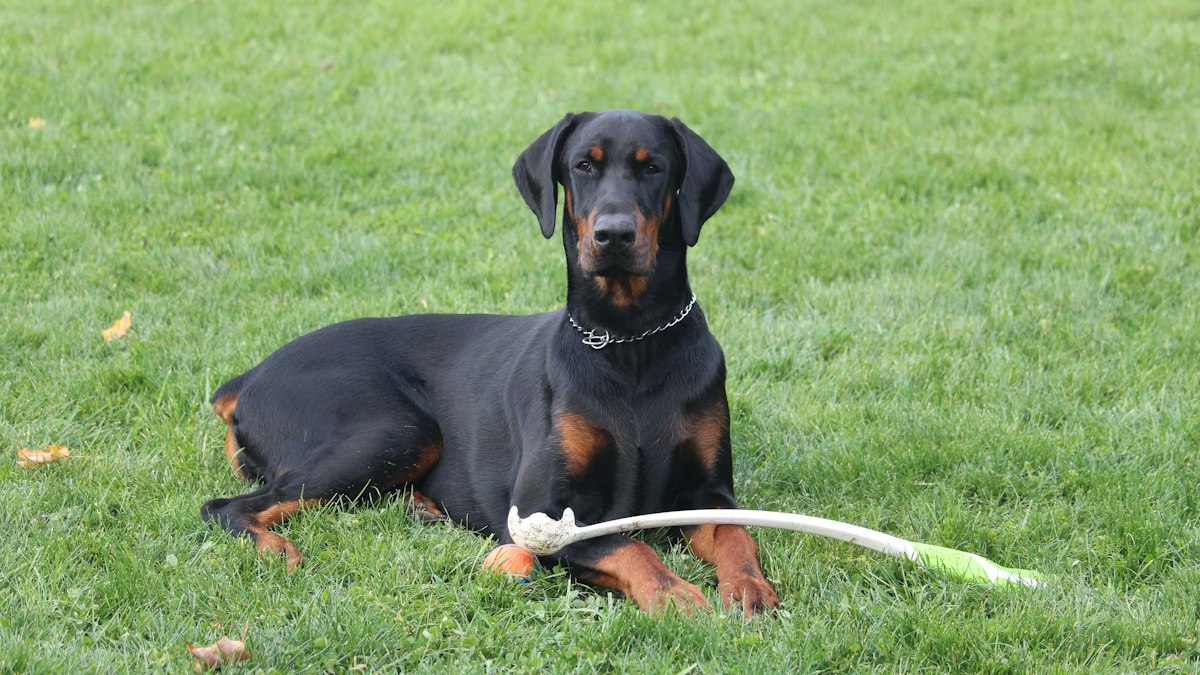
The Doberman Pinscher is a sleek, intelligent and deeply loyal dog that was developed as a personal protection companion and still loves to be close to its family. Owners most often struggle with high energy, clinginess, alert barking, leash manners and the need for steady, early socialisation.
Doberman Pinscher at a glance
- Size: large, athletic and muscular.
- Energy level: high; needs daily physical and mental work.
- Shedding level: low to moderate; short coat with some seasonal shedding.
- Barking tendency: moderate; tends to alert-bark at unusual sounds or visitors.
- Good for first-time owners: with work; they thrive with confident, consistent, reward-based handling.
- Time alone tolerance: low; many Dobermans are true “velcro dogs” who want to be near their people.
Common Doberman Pinscher problems and solutions
Most Doberman challenges come down to three things: energy, attachment and early experiences. When those needs are met, many owners find their dog is a calm, affectionate shadow at home.
Why does my Doberman follow me everywhere?
Dobermans are known for bonding very closely with their family, so following you from room to room is typical. It becomes a problem only if your dog panics when you leave its sight; practise short separations and reward calm behaviour. Read why dogs follow you everywhere for practical steps.
Can Dobermans be left alone?
Many find long periods alone difficult. Build alone time gradually, starting with a few minutes, give a food puzzle when you leave, and avoid big emotional goodbyes. Our guide on helping a dog with separation anxiety explains a gentle plan.
How much exercise does a Doberman need?
Most adult Dobermans need at least an hour or more of activity daily, combining brisk walks, running games and training. Mental exercise like nose work and obedience practice is just as tiring as physical exercise for this clever breed. Split activity into two or three sessions a day rather than one long outing, and give your dog quiet rest time afterwards.
Why does my Doberman bark at the door?
Dobermans are naturally watchful, so announcing visitors is common. Teach a “thank you, go to your mat” routine and reward quiet as soon as it happens. See dog won’t stop barking at the door for the full method.
Why does my Doberman pull on the leash?
Strong, fast and curious, a Doberman can pull hard if it is never taught otherwise. Reward your dog for walking beside you, pause when the leash goes tight, and keep early sessions short. Our guide on stopping leash pulling has a step-by-step plan.
Why is my Doberman reactive to other dogs on walks?
Reactivity usually comes from frustration, fear or a lack of positive experiences. Keep enough distance that your dog stays calm, reward it for looking at the trigger and then back at you, and slowly reduce distance over weeks. Read handling a reactive dog on walks.
Are Dobermans good guard dogs, or just protective?
Dobermans tend to be watchful and devoted, which is not the same as being aggressive. A well-socialised Doberman is usually friendly with guests once introduced; focus on early socialisation and calm greetings rather than encouraging guarding behaviour. Let your dog meet calm visitors on a leash at first, reward relaxed body language, and give it a safe spot to retreat to if it feels unsure.
Why does my Doberman puppy chew everything?
Teething, boredom and curiosity drive chewing. Offer plenty of safe chew toys, rotate them, and supervise or use a puppy-proofed area when you cannot watch. Praise your puppy every time it picks the right item to chew. Our guide to stopping a puppy chewing furniture helps.
Do Dobermans shed?
They shed lightly to moderately, with short hairs that are easy to manage. A weekly rub with a rubber grooming mitt keeps the coat shiny and reduces hair on furniture. Check nails and ears at the same time so grooming becomes a quick, relaxed routine.
Why does my Doberman jump on guests?
Big excited greetings are common with this affectionate breed. Ask for a sit before anyone says hello, have guests turn away when your dog jumps, and reward four paws on the floor. See why dogs jump on everyone.
Do Dobermans get cold easily?
Their short, thin coat and lean body give little protection from cold. A fitted coat for winter walks and a warm, padded bed indoors keep them comfortable. On very cold or icy days, swap part of the walk for indoor training games.
Training tips for a Doberman Pinscher
Dobermans are quick learners who notice everything, including inconsistency. Clear, kind and predictable training builds a confident adult dog.
- Begin socialisation early and keep it going: calm, positive exposure to people of all ages, other dogs, traffic and new places.
- Use reward-based methods with food, toys and praise; Dobermans are sensitive and respond poorly to harsh corrections.
- Keep sessions short and varied so your clever dog stays engaged instead of bored.
- Teach a solid recall early in a safe space. Our recall training guide covers the basics.
- Teach a relaxed “place” or “settle” behaviour so your dog learns to switch off in the house.
- Add brain games like scent work, hide-and-seek and food puzzles to tire the mind as well as the body.
- Stay consistent with rules across the household so your dog always knows what is expected.
Health questions owners ask
This section is general information only. Every dog is different, so talk to your vet about your own Doberman’s health plan.
Are Dobermans prone to heart problems?
Heart conditions are among the most commonly discussed health concerns in the breed. Ask breeders about health screening and talk to your vet about regular check-ups and any heart screening they recommend. Mention any fainting, coughing or unusual tiredness at your next visit.
Do Dobermans have bleeding or clotting issues?
An inherited clotting disorder is known in the breed, and DNA testing is available. Talk to your vet before any planned surgery and ask the breeder about testing results.
Can Dobermans get bloat?
Deep-chested breeds like the Doberman can be at higher risk of a serious stomach condition called bloat. Learn the warning signs, avoid heavy exercise right after meals, and talk to your vet about prevention.
How do I keep my Doberman’s joints healthy?
Keeping your dog lean, avoiding repetitive high-impact exercise while young, and providing good traction indoors all help. Talk to your vet about the right exercise plan as your dog grows.
Is a Doberman Pinscher right for you?
A Doberman can be a wonderful companion for the right household. Be honest about your time, space and lifestyle before you decide.
Can a Doberman live in an apartment?
Yes, if it gets enough daily exercise and training; Dobermans are often calm indoors once their needs are met. Noise from hallways can trigger alert barking, so work on calm responses early.
Are Dobermans good with kids?
Many Dobermans are gentle, loving family dogs when raised and socialised with children. Always supervise, especially with toddlers, and teach kids how to interact respectfully. A big, bouncy young Doberman can knock small children over during play, so calm games work best.
Do Dobermans get along with other pets?
Many live happily with other dogs and cats, particularly when introduced young. Slow, supervised introductions help adult dogs adjust. Feed pets separately and give each one its own space to rest.
Is a Doberman a good first dog?
A dedicated first-time owner can succeed with professional reward-based training support and plenty of time. Some areas have local rules about certain breeds, so check what applies where you live before bringing one home.
Related guides
- Separation anxiety solutions
- Leash problems and fixes
- Barking problems and solutions
- Enrichment toys to keep busy minds happy
- Helping your dog settle at night
- Compare with the Rottweiler
Share your Doberman Pinscher experience
Every Doberman has its own personality, from the goofy couch potato to the tireless running buddy. What helped your dog settle, stop pulling or feel more relaxed when alone? Share your tips, questions and wins in our dog owner community, or explore other breed guides to compare.