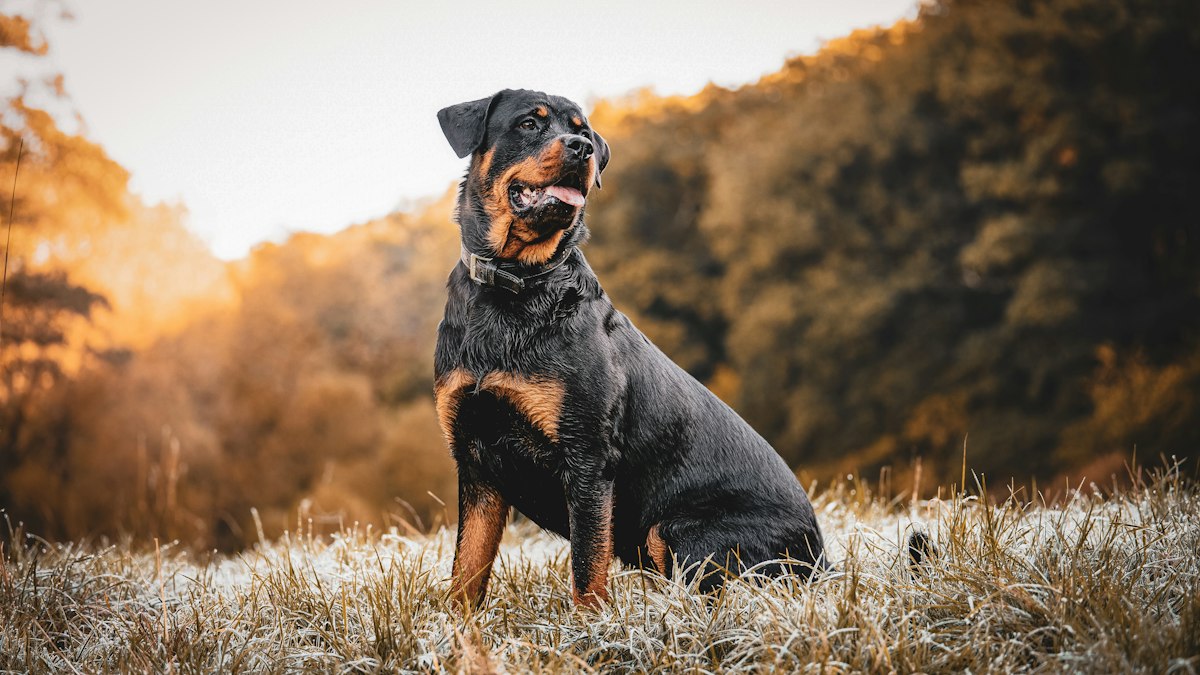
The Rottweiler is a powerful, loyal working dog with a calm confidence and a strong bond with its family. Owners love their devoted, playful side, but they often face challenges with early socialisation, leash manners, guarding behaviour, shedding and simply managing a big, strong dog in everyday life.
Rottweiler at a glance
- Size: large and muscular; adults are heavy and strong.
- Energy level: moderate to high; Rottweilers tend to need daily exercise plus training and mental work.
- Shedding level: moderate, with heavier seasonal shedding from the short double coat.
- Barking tendency: low to moderate; many Rotties bark with purpose rather than constantly.
- Good for first-time owners: with work; best with owners committed to structured training and socialisation.
- Time alone tolerance: moderate; they are family-focused and may get bored or destructive if left alone too long.
Common Rottweiler problems and solutions
Why is socialisation so important for a Rottweiler?
Rottweilers were bred to guard and work, so they can be naturally watchful with strangers. Positive, well-paced exposure to people, dogs, sounds and places from puppyhood helps them grow into confident, relaxed adults. Keep socialisation going all through adolescence, not just the first few months.
Why does my Rottweiler pull on the leash?
A strong dog pulling can be hard to handle, so leash manners are a priority. Use a well-fitted harness, stop when the leash goes tight and reward every few steps of loose walking. Our guide on how to stop a dog pulling on the leash explains the method.
Why does my Rottweiler react to other dogs on walks?
Leash reactivity can come from frustration, fear or lack of practice around other dogs. Increase distance, reward calm looks and avoid tight greetings on leash. Read our guide on a reactive dog on walks, and consider a qualified reward-based trainer for one-on-one support.
Why does my Rottweiler bark at the door?
Alerting to visitors is natural for a guardian breed. Teach your Rottie to bark once, then go to a mat for a reward while you answer the door. Our article on a dog that won’t stop barking at the door has a step-by-step plan.
Is my Rottweiler being protective or anxious?
Staring, stiffening or barking at strangers can be guarding, worry or both. Do not punish warning signals like growling, as that removes the warning without fixing the feeling. Instead, give your dog more space and reward calm behaviour, and get help from a reward-based trainer or behaviour professional if it is escalating.
Do Rottweilers shed a lot?
Rotties shed moderately most of the year and more heavily in spring and fall. Weekly brushing with a rubber curry brush, plus extra sessions during shedding season, keeps fur under control. See the best ways to control dog shedding and removing dog hair from car seats.
Why does my Rottweiler jump on people?
A friendly Rottie jumping up can knock people over. Reward sitting for greetings, ask guests to turn away from jumping and practise often with friends. Our guide on why dogs jump on everyone helps.
Why does my Rottweiler lean on me?
Many Rottweilers lean against their people as a sign of closeness and comfort. It is usually affectionate, but if you prefer, teach a cue to sit beside you instead and reward that.
Why does my Rottweiler chew things when left alone?
Boredom and missing their family are common reasons. Give a good walk and some brain games before you leave, plus durable chews. Read a dog that destroys things when alone for more solutions.
Can a Rottweiler live in an apartment?
Some do, but it takes commitment: daily exercise, excellent leash manners in hallways and elevators, and careful management around neighbours. A home with a secure yard is often easier. Also be aware that some buildings, insurers or local areas can have rules about certain breeds, so check before you move.
Why does my Rottweiler follow me from room to room?
Rottweilers are often called “velcro dogs” because they like to keep their family in sight. That closeness is normal, but teach a relaxed stay on a bed so your dog can also rest alone. Our article on why dogs follow you everywhere explains how.
How much exercise does a Rottweiler need?
Most adult Rotties do well with an hour or more of activity a day, mixing walks, play and training. Avoid lots of hard jumping and forced running while puppies are still growing, and add scent work or obedience games for mental exercise.
Training tips for a Rottweiler
- Start reward-based training and socialisation the day your puppy comes home, before they get big and strong.
- Use food, toys and praise; Rottweilers often work hard for owners they trust, and harsh methods can damage that trust.
- Prioritise loose-leash walking, a solid sit, down, stay and a reliable recall.
- Teach calm greetings with visitors using a mat or place cue.
- Practise handling of paws, mouth, ears and body every day so vet visits and grooming stay easy.
- Join a positive puppy or obedience class to practise around other dogs and people under guidance.
- Keep training going through adolescence, when many large dogs test limits; consistency is everything, and every family member should use the same cues and rules.
Health questions owners ask
Are Rottweilers prone to hip and elbow problems?
Joint conditions are commonly discussed in large breeds, including Rottweilers, and responsible breeders usually screen parent dogs. A lean body and age-appropriate exercise help support joints. Talk to your vet about your dog’s growth and activity plan.
What is bloat and should I worry about it?
Bloat is an emergency that is often mentioned for large, deep-chested dogs. Know the warning signs, like a swollen belly, restlessness and trying to vomit without success. Talk to your vet about prevention and what to do if it happens.
How do I keep my Rottweiler at a healthy weight?
Rotties enjoy food, and extra pounds put strain on joints. Measure meals, count training treats, keep up daily walks and check regularly that you can feel the ribs under a thin layer of padding. Talk to your vet about an ideal weight for your dog.
Why is my Rottweiler limping?
Limping can come from a minor strain or something that needs care. Rest your dog, avoid hard play and stairs for a while, and note which leg is affected and when it started. Talk to your vet if the limp lasts more than a day or keeps coming back.
Is a Rottweiler right for you?
Is a Rottweiler good for apartment life?
It is possible with a dedicated owner who walks, trains and plays every day, but most Rottweilers are happier with more space and a yard. Check building and local rules first.
Are Rottweilers good with kids?
Many well-socialised Rottweilers are gentle, loyal family dogs who enjoy calm play and cuddles. Because of their size and strength, always supervise children and dogs together and teach kids to respect the dog’s space.
Do Rottweilers get along with other pets?
Many live happily with other dogs and cats, especially when raised with them. Introduce new pets slowly, keep early meetings short and supervised, feed separately and reward calm behaviour.
Is a Rottweiler a good first dog?
It can be for a first-time owner who is ready to invest in classes, daily training and lifelong socialisation. If you are unsure, compare with other large breeds like the German Shepherd or Labrador Retriever in our breed guide.
Related guides
- Leash problems and walking tips
- Barking problems and solutions
- Dog shedding guide
- Teach your dog to come when called
- Harnesses and walking gear
- Enrichment toys
Share your Rottweiler experience
Have you helped your Rottie become a calm, confident companion? Share what worked in the dogs.solutions community, and explore more breeds in our breed guide.