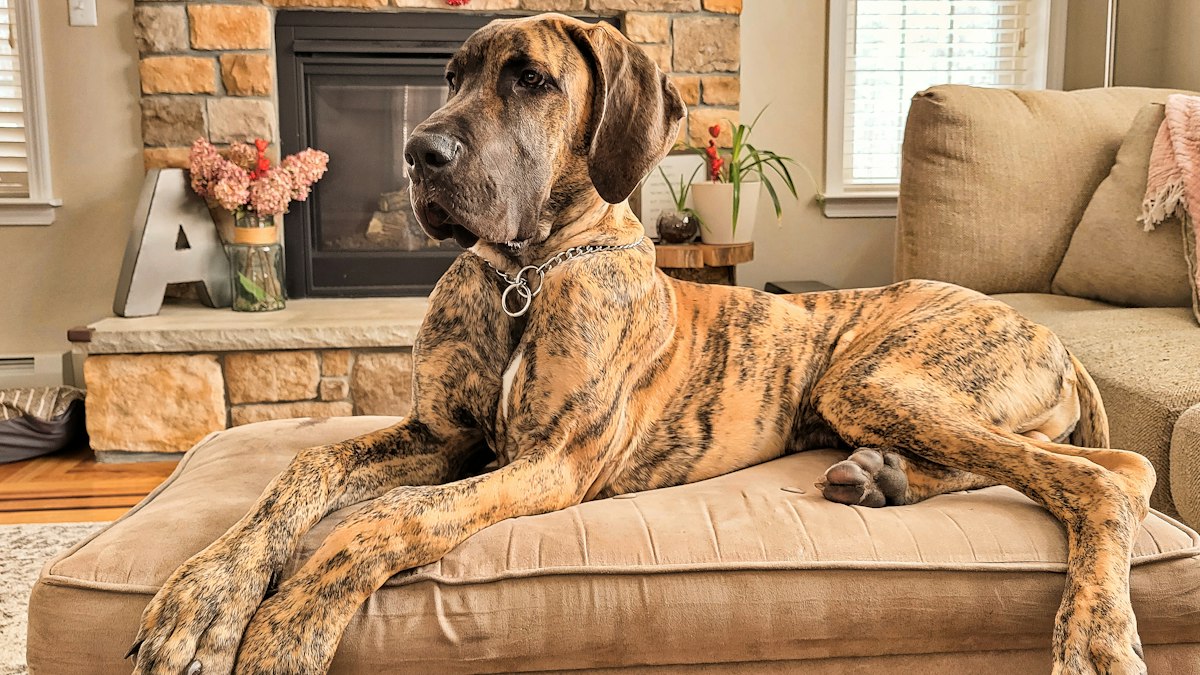
The Great Dane is a giant, gentle and affectionate dog that often believes it is a lap dog despite its size. Owners most often struggle with managing size and strength, leash pulling, jumping, separation stress, drooling and the health concerns that come with a giant breed.
Great Dane at a glance
- Size: giant; one of the tallest dog breeds.
- Energy level: moderate; playful but often calm indoors as adults.
- Shedding level: moderate; short coat but lots of it.
- Barking tendency: low to moderate; tends to bark with a deep voice when alerting.
- Good for first-time owners: with work; gentle but needs early training because of size.
- Time alone tolerance: low to moderate; many Danes are very attached to their family.
Common Great Dane problems and solutions
Most Great Dane problems are normal dog behaviours made bigger by their size. Early training and good management make daily life much easier.
How do I stop my Great Dane pulling on the leash?
A pulling Dane can be hard to hold, so start loose-leash training in puppyhood. Reward your dog for staying beside you, stop when the leash tightens, and use a secure, well-fitted harness. Our guide on how to stop leash pulling has a clear plan.
Why does my Great Dane jump on people?
A friendly jump from a Dane can knock people over. Ask for a sit before greetings, ask guests to ignore jumping, and reward four paws on the floor. Read why dogs jump on everyone.
Do Great Danes get separation anxiety?
Many Danes are deeply attached to their people and dislike long periods alone. Practise short departures, give a long-lasting chew, and keep goodbyes low-key. A comfortable, extra-large bed helps your Dane settle while you are away. See helping a dog with separation anxiety.
Why does my Great Dane lean on me?
Leaning is often a sign of affection or seeking comfort, and many Danes do it with people they trust. It is usually harmless, but if it comes with clinginess when you leave, see why dogs follow you everywhere.
How much exercise does a Great Dane need?
Adult Danes usually need moderate daily exercise, such as two or three walks and some play, plus gentle training games at home. Puppies should avoid long runs and repetitive jumping while their joints develop, so talk to your vet about a suitable plan.
Do Great Danes shed a lot?
They shed moderately, but because of their size there is a lot of hair overall. Brush weekly with a rubber mitt, and wash bedding often since giant beds collect a lot of hair. See best ways to control dog shedding.
Why does my Great Dane drool so much?
Many Danes drool, especially after drinking, eating or when excited. Keep a towel handy, wipe the mouth after meals, and use washable covers on furniture. A raised water station with a mat under it helps keep the floor dry.
Why is my Great Dane puppy destroying the house?
Giant puppies have giant chewing power and can reach counters easily. Puppy-proof high and low, offer sturdy chews and supervise. A safe pen or crate gives your puppy a place to rest when you cannot watch. Read stopping a puppy chewing furniture.
Why does my Great Dane counter surf?
Danes can reach food on counters without even jumping. Keep counters clear, reward your dog for staying on a mat while you cook, and teach “leave it” consistently. One successful snack theft can make the habit stronger, so management matters.
Why is my Great Dane scared of everything?
Some Danes are sensitive and can be nervous in new situations. Build confidence with slow, positive exposure and never force your dog closer to something scary. Let your Dane observe from a distance and reward calm curiosity. For noise fears, see helping a dog afraid of fireworks.
Why is my Great Dane potty training taking so long?
Giant puppies grow fast but still need frequent outings. Use a schedule, reward success outdoors, and clean accidents with an enzyme cleaner. Go outside with your puppy every time so you can reward it right away. See a puppy that keeps peeing in the house.
Why does my Great Dane bark at the neighbours?
A Dane’s deep bark can carry, so it is worth working on early. Block views of the street or fence, call your dog away for a reward, and practise calm behaviour in the yard. See dogs barking at neighbours.
Training tips for a Great Dane
Training a Dane early is essential, because habits that are cute in a puppy become difficult in a dog that weighs as much as an adult person.
- Start socialisation early with calm, positive experiences with people, dogs and places.
- Use gentle, reward-based training; many Danes are sensitive to harsh handling.
- Teach loose-leash walking before your puppy gets big and strong.
- Teach “sit” for greetings and a calm “place” behaviour indoors.
- Practise “leave it” and “off” to manage counter surfing and furniture.
- Keep sessions short and fun, with plenty of praise.
- Practise short alone time regularly from puppyhood.
Health questions owners ask
Giant breeds have some specific health considerations. This is general information only, so talk to your vet about your own Great Dane.
Are Great Danes prone to bloat?
Bloat is one of the most widely discussed concerns in Great Danes. Learn the warning signs, avoid heavy exercise around meals, and talk to your vet about prevention options.
Do Great Danes have heart problems?
Some heart conditions are discussed in giant breeds, including the Dane. Ask breeders about health screening and talk to your vet about regular check-ups. Mention any coughing, fainting or unusual tiredness.
How do I protect my Great Dane’s joints?
Controlled growth, a healthy weight and appropriate exercise help support joints. Non-slip rugs indoors also help a large dog move safely. Talk to your vet about feeding and exercise plans for giant-breed puppies.
How long do Great Danes live?
Like many giant breeds, Great Danes generally have a shorter lifespan than smaller dogs. Regular vet care and a healthy lifestyle help them enjoy their years. Talk to your vet about senior care as your Dane gets older.
Is a Great Dane right for you?
Danes are loving, gentle giants, but their size affects everything from your car to your budget. Consider these questions first.
Can a Great Dane live in an apartment?
Surprisingly, many adult Danes are calm indoors and can adapt to apartments with daily walks. Space for a large bed and easy access outside are important. Elevators help, because many stairs can be hard on giant-breed joints.
Are Great Danes good with kids?
Many are gentle and patient with children. Their size means supervision is essential, as a wagging tail or bump can knock over small kids. Teach children to stay calm and give the dog space when it lies down.
Do Great Danes get along with other pets?
Most Danes get along with other dogs and cats when introduced calmly. Supervise play with small pets because of the size difference, and give everyone separate resting areas.
Is a Great Dane good for first-time owners?
It can be, for owners ready for early training and the higher costs of a giant breed, from food to bedding to vet care. See how much owning a dog costs before you decide.
Related guides
- Leash problems and fixes
- Separation anxiety solutions
- All dog behaviour problems
- Walking gear for big dogs
- Helping your dog settle at night
- Compare with the Irish Wolfhound
Share your Great Dane experience
Living with a Great Dane means big love and big paws on the sofa. What helped your Dane with leash manners, jumping or alone time? Share your story in our dog owner community, or browse more breed guides.